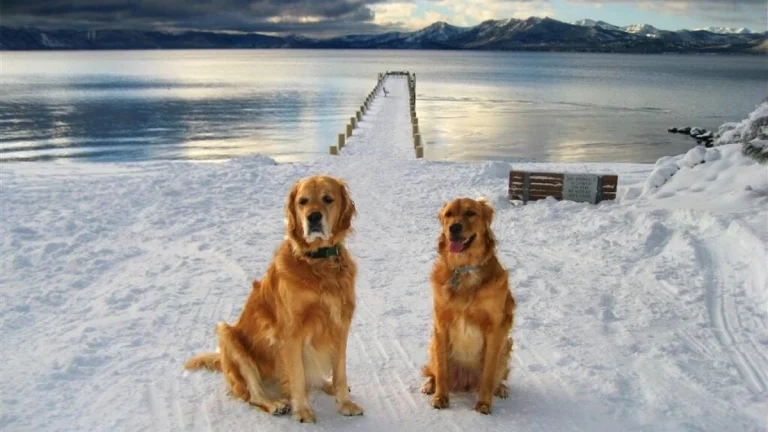
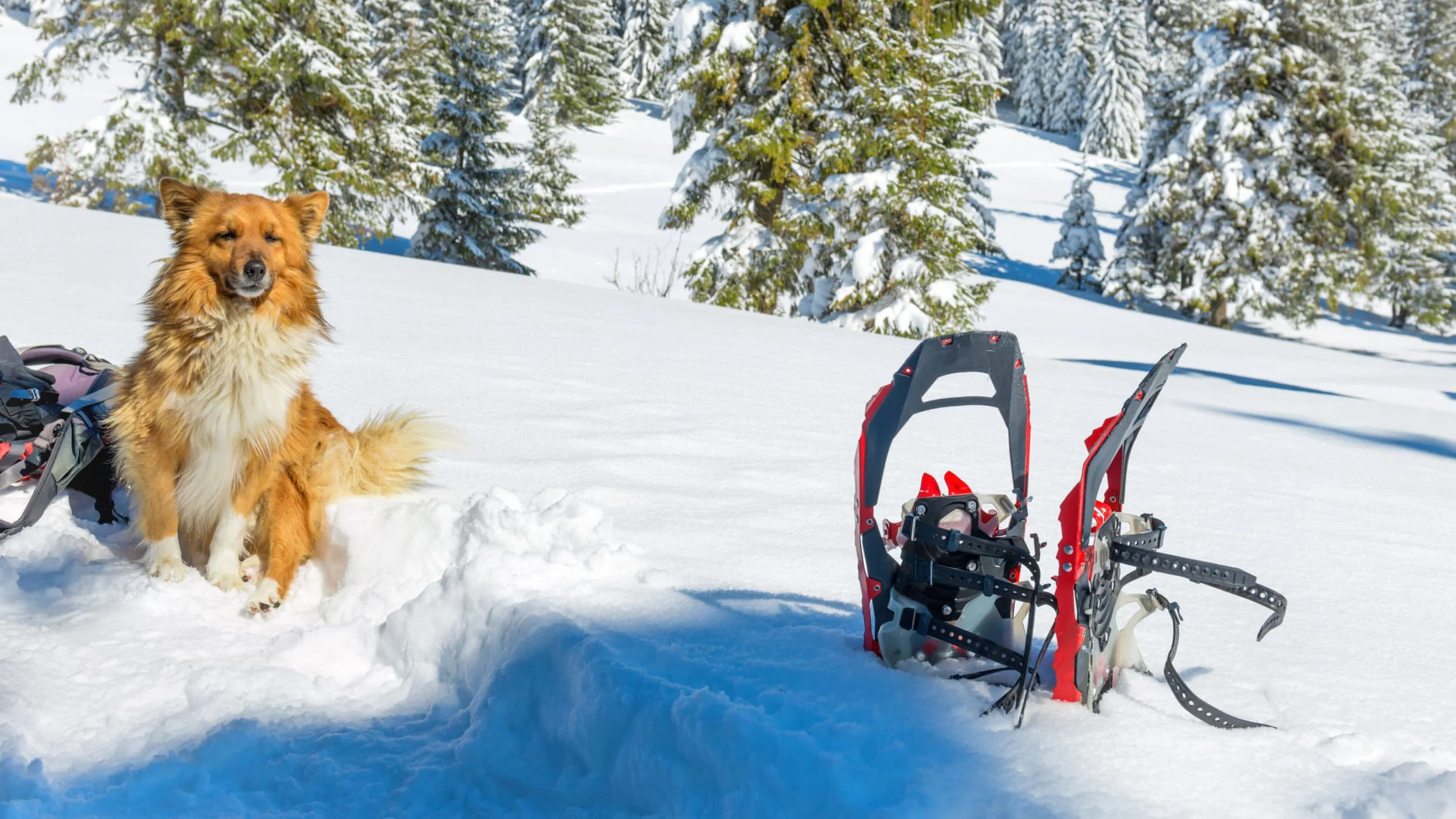
Anywhere there’s snow, you can snowshoe. Pick a bluebird day and pack plenty of pep for an excursion to Echo Lakes, the southern gateway to Desolation Wilderness and one of the most glorious (and dog-friendly) cross-country ski and snowshoe destinations in the Sierra.
The shallow, connecting bodies of water just north of Highway 50 at Echo Summit sit above 7,000 feet and are frozen over in winter (but check with locals, who turn out in force on weekends, to confirm). Their flat, easy-going surfaces are ideal for both human and canine novices. Park in the lot at Johnson Pass Road (Sno-Park permit required), strap on your gear and trek about a mile, mostly downhill, to reach Echo Chalet (closed in winter) and the lower lake. Go as far in as you like: it’s about a mile to the far side of Lower Echo and another 2.5 miles to the far end of the upper lake and the Desolation boundary. (You can also follow the Pacific Crest Trail around the edge of the lake, although it can be quite rugged in winter.)
Either way, prepare for scenic overload—and save plenty of energy for the uphill slog back to your vehicle. You’ll wish you were mushing behind a fresh team of dogs rather than panting alongside a tired Rover at the end of a long day. Most dogs handle the flat lake surface well, but watch for thin ice near inlets and keep your pup close in those areas.
Not in the market for something so ambitious? The Big and Little Shorty loops leave right from the parking lot and are rated easy. These shorter loops are a good way to test your dog’s comfort with snowshoeing before committing to a longer outing, and they still deliver beautiful views of the surrounding peaks.
Among other popular venues for dog-friendly snowshoeing in Tahoe and surrounding areas are Meeks Bay, Page Meadow, Fallen Leaf Lake Trail, North Tahoe Regional Park and Hope Valley. Several developed cross-country ski areas, including Kirkwood XC & Snowshoe Center, Tahoe Cross Country and Tahoe Donner Cross-Country, welcome canine-accompanied snowshoers on designated trails. Each has its own dog policy, so call ahead to confirm which trails allow dogs on the day you plan to visit.
A note about etiquette: Please stay out of and away from groomed cross-country ski tracks, as trampling them makes the going difficult for skiers and creates ill will between user groups. Your dog’s paws can do just as much damage as your snowshoes, so keep them off the groomed lanes too.
And a note about how to snowshoe with a dog: Tie a leash around your waist until you get to an area where you can unclip—or, better yet, invest in a hands-free leash solution such as a skijoring rig consisting of a hip belt attached to a bungee-like tow line that will allow your dog to move ahead of you while you keep your hands on the poles. A bungee line absorbs sudden pulls, which is important when you are balancing on snowshoes and your dog spots a squirrel.