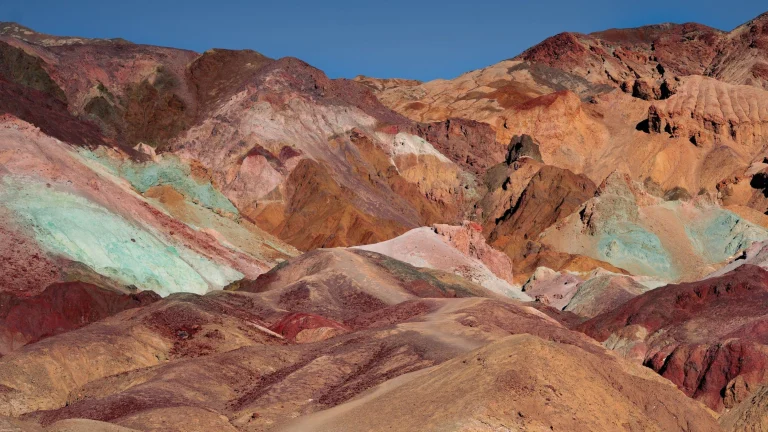
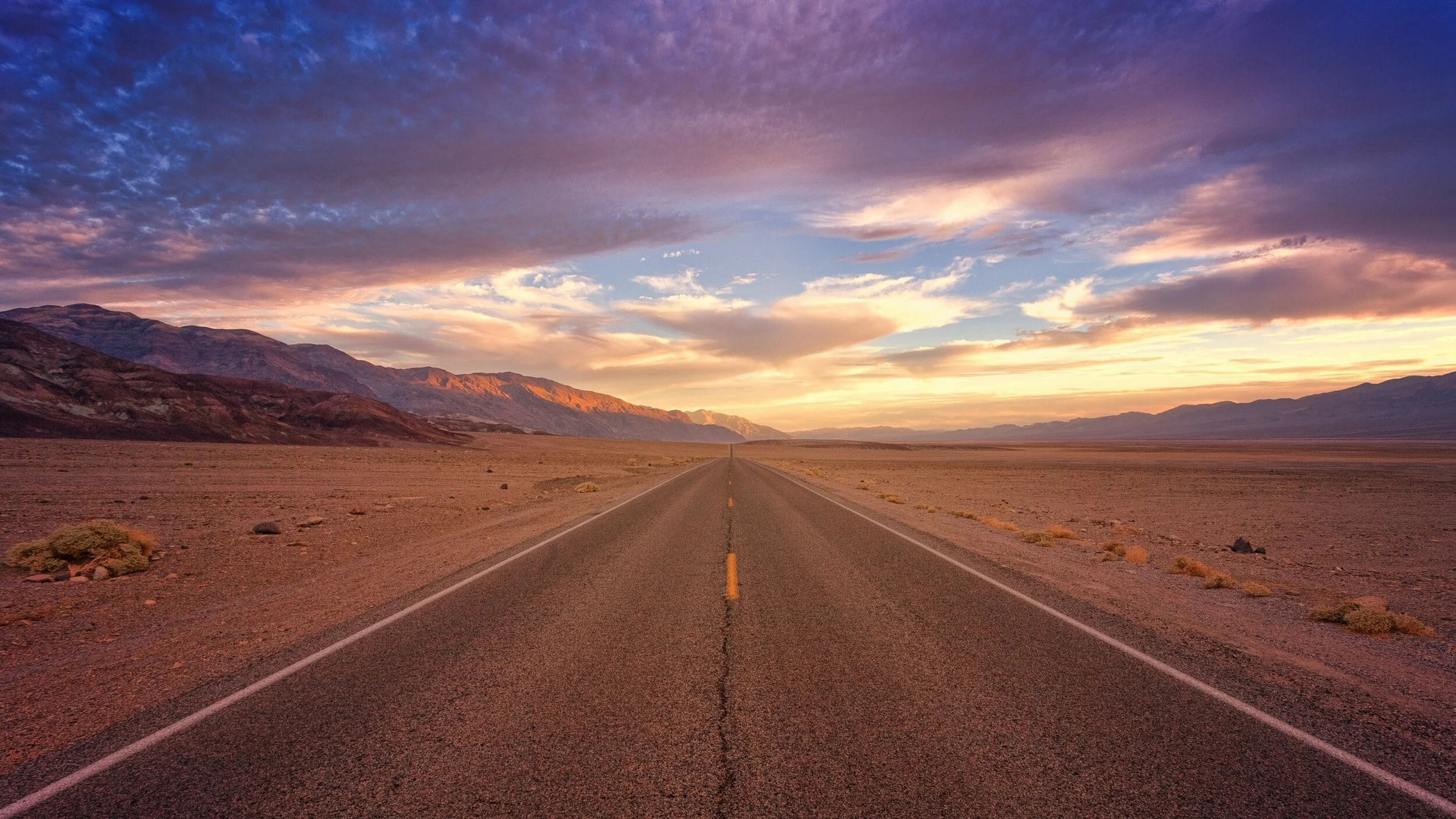
Forget your preconceived notions; Death Valley isn’t just a long stretch of sand and cactus—it’s truly one of the most dramatic and colorful places on Earth. Nowhere else on the planet will you see salt-crusted badlands 282 feet below sea level walled in by mountains 11,000 feet high. Geologic oddities abound, all encased in air so clear it seems like it could shatter. The valley’s human history, incorporating cowboys, Indians, burro-packing miners, outlaws, stranded pioneers, wealthy eccentrics and twenty-mule teams hauling borax, is equally rugged and colorful.
Exceedingly pleasant temperatures—low 60s in the daytime, low 40s at night—make January and February the ideal time to visit Death Valley. This is one of the best drive-through parks in the country, with scores of fascinating sights visible from the road. While dogs are allowed in campgrounds, in developed areas and on or within 100 yards of paved roads, they’re not allowed on trails or boardwalks; neither are they supposed to be left in your car while you take a quick hike. But don’t let this stop you: within the national park are more than 700 miles of backcountry roads where the two of you legally can walk if connected by a leash. Two scenic roads recommended by the park service are Twenty Mule Team Canyon Road and Titus Canyon Road into the narrows. With a high-clearance vehicle, you’ll find much more to explore.
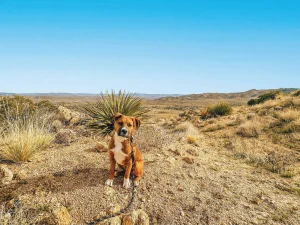
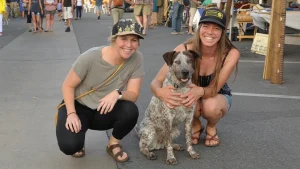
Keep in mind that Death Valley’s extreme environment calls for extra preparation when traveling with a dog. Pack at least a gallon of water per dog per day, and watch for signs of overheating—hot pavement and sand can burn paw pads quickly. A collapsible water bowl and a shade canopy for your campsite are must-haves. Even in winter, midday sun can be intense at lower elevations. For more tips on keeping your dog safe in the desert, read our guide to protecting your dog from heatstroke.
When it comes to dog-friendly lodging, park visitors are in luck. Stovepipe Wells Village, one of the main lodging/refueling places in the park, welcomes dogs at no charge in its rustic, clean motel rooms. The adjacent RV park is dog-friendly, too, as is the nearby national park campground. The rustic Panamint Springs Resort near the park’s western boundary is another choice; it welcomes dogs in motel rooms, tent cabins, and campground sites.
A word of advice for Death Valley visitors: Bring quarters or pre-paid calling cards for use with pay phones. There’s no cell-phone reception in the park, and the few Internet hotspots (at visitor centers and hotels) don’t work so hot. But then, you wouldn’t be here if you didn’t want to get away from it all. Right? If you’re looking to explore more of the California desert with your dog, don’t miss Joshua Tree and Anza Borrego or our roundup of camping and hiking in the California deserts.