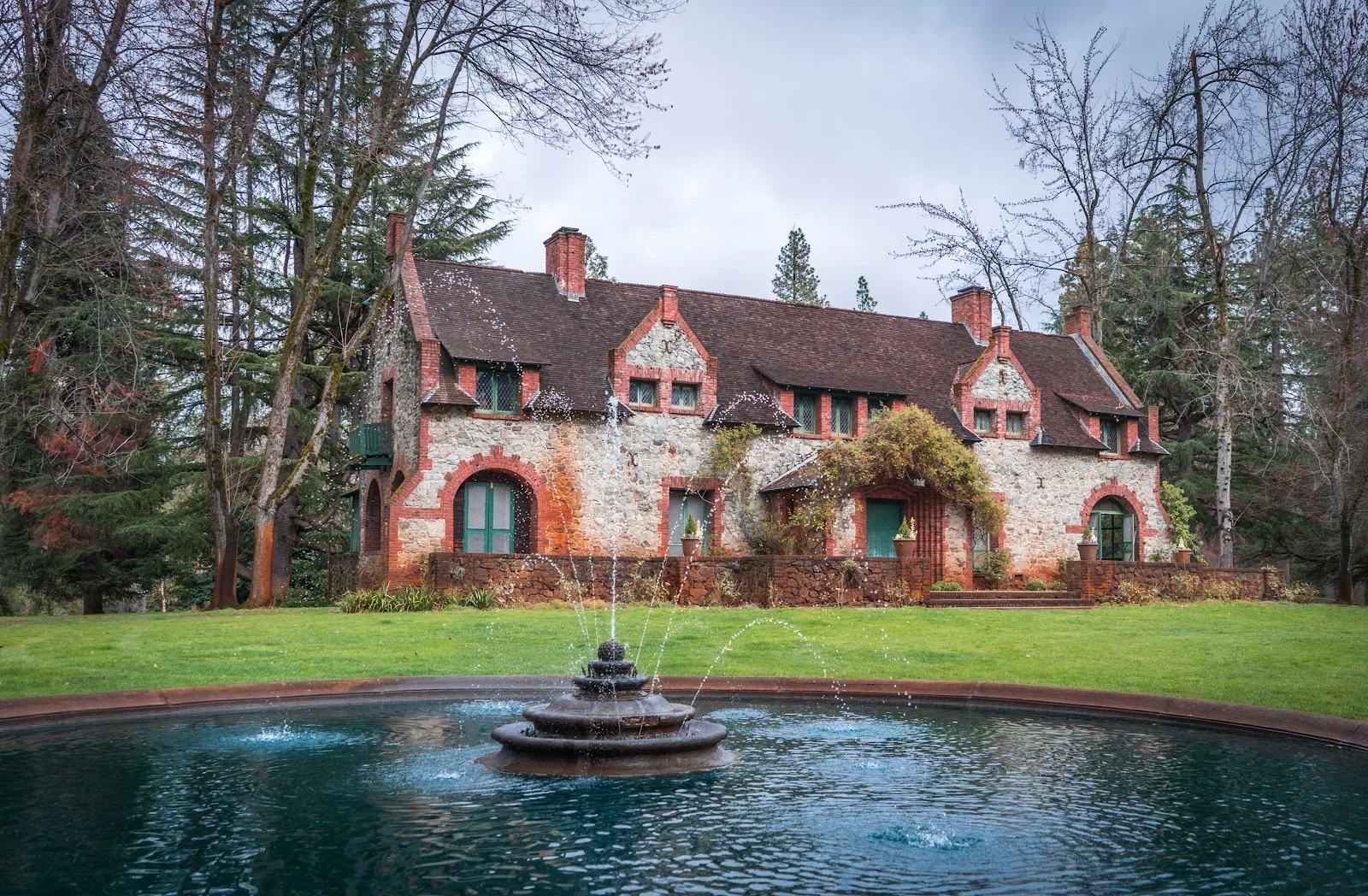
Empire Mine State Historic Park sprawls across 784 acres of rolling foothill terrain in Grass Valley, laced with old mining roads, open meadows, and second-growth forest that still bears the marks of 150 years of gold extraction. The landscape itself tells the story through the Empire Mine shaft house, a substantial stone structure that dominates the historic zone, alongside collapsed mine entrances, rusted equipment scattered across the grounds, rock walls, water channels, and mine tailings. The park contains two distinct zones: the preserved historic core with its buildings and machinery, and the wilder backcountry of trails and fire roads that climb through oak woodland and grassland, with views across the Sierra Nevada foothills.
Dogs are allowed on the roads and trails throughout the park. They can walk the grounds in the historic zone and explore the visitor center area, though they cannot enter historic buildings or descend into mine shafts (service animals excepted). This straightforward policy means your dog gets genuine trail access—not the restricted campground-only or paved-road-only policies at many state parks. The trail system spans roughly 14 miles of interconnected routes ranging from easy 1-mile loops near the visitor center to more challenging climbs through the backcountry. Terrain varies between old mining roads (mostly non-technical) and narrower footpaths that wind through mixed oak and Douglas fir. Wildlife includes deer, coyotes, and occasional black bears, though sightings are uncommon.
Access requires a standard state park entrance fee. The park sits at about 2,500 feet elevation, so spring and fall offer the most comfortable hiking conditions; summers can be hot and dry, while winter occasionally brings snow that closes some roads. The best dog-hiking window runs from April through October, with late April through May bringing wildflower color and cooler temperatures. Winter rains may leave some fire roads muddy. During peak heat, plan early morning walks to keep your dog comfortable. The visitor center has water fountains and shaded areas where dogs can rest. Located roughly 90 minutes from both Sacramento and the Bay Area, the park draws weekend crowds—arriving before 10 a.m. helps secure parking near the trailheads.