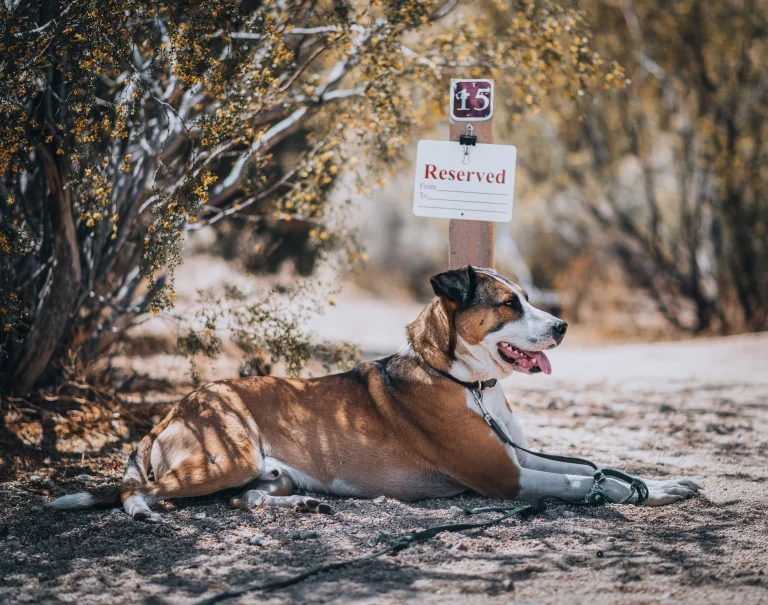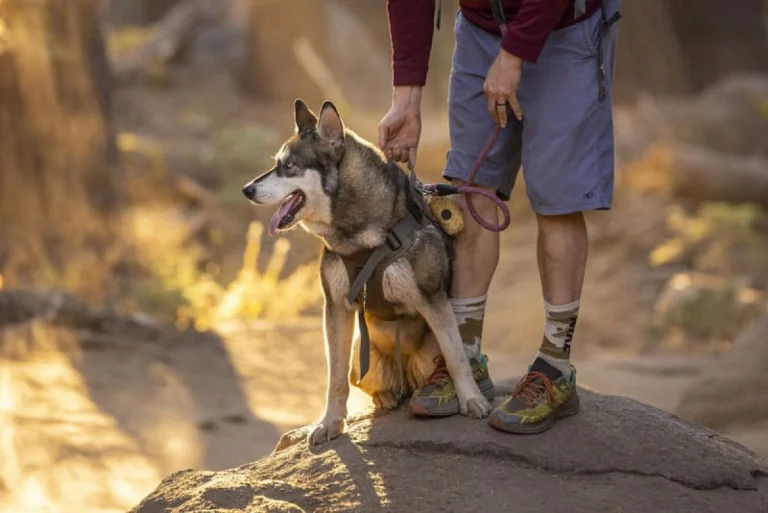
So, a friend told you about a great place to camp with your dog. But how do you make reservations? Here are three places to start, plus some practical tips to help you and your pup land that perfect campsite.
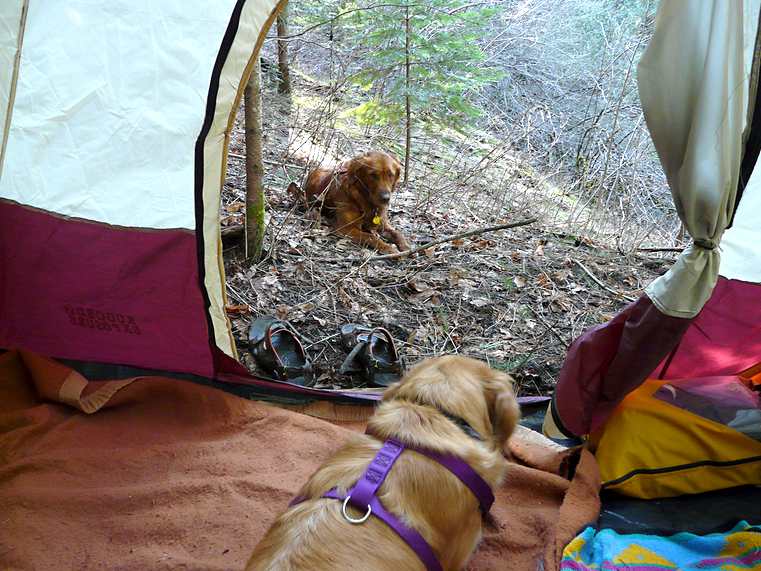
Photo courtesy Bob White (CC)
– Reserve America handles reservations for 572 federal, state, private and regional park district campgrounds in California (a dog icon designates those that are dog-friendly).
– Recreation.gov is an umbrella site for reservable activities on federal lands, including camping in national forests.
– “Foghorn Outdoors California Camping” by Tom Stienstra (Avalon Travel Publishing) is a useful tome for finding descriptions and reservation information for more than 1,500 campgrounds, most of them dog friendly.
Be aware that most of California’s coastal campgrounds, as well as most in popular destinations like Lake Tahoe, are booked out six months in advance for summer visits, so snagging a last-minute weekend reservation requires persistence.
Here are some tips:
– Inquire about the cancelation window at your chosen location (30 days at Yosemite, for example) and call that many days in advance of your preferred dates to see if any spots have opened up.
– Find out if your preferred campsite has any “first-come” or “overflow” sites in its inventory (most do). Take a risk by showing up at the gates about a half-hour before check-out time.
– Some popular coastal campgrounds use a lottery system to distribute sites made available through cancellations. This is a good option if your schedule is flexible.
– Choose a campground that operates purely on a first-come basis and arrive on a Thursday if you want to stay over the weekend.
– Go midweek, or wait until after Labor Day.
Once you have your site reserved, a little preparation goes a long way toward making the trip great for your dog. Pack a long tie-out cable so your pup has room to move around camp without wandering into neighboring sites. Bring extra water, as not all campgrounds have reliable spigots at every loop, and creek water can carry giardia and other parasites that affect dogs just as they do people.
At the campsite, keep your dog’s food sealed in airtight containers to avoid attracting raccoons, bears and other wildlife. Many campgrounds in bear country require food storage in bear boxes, and that includes dog kibble and treats. A glow-in-the-dark collar or clip-on LED light is also a smart addition for nighttime bathroom runs so you can keep track of your pup in the dark. And always have a current photo of your dog on your phone, just in case they slip away from camp and you need to describe them to rangers or fellow campers.