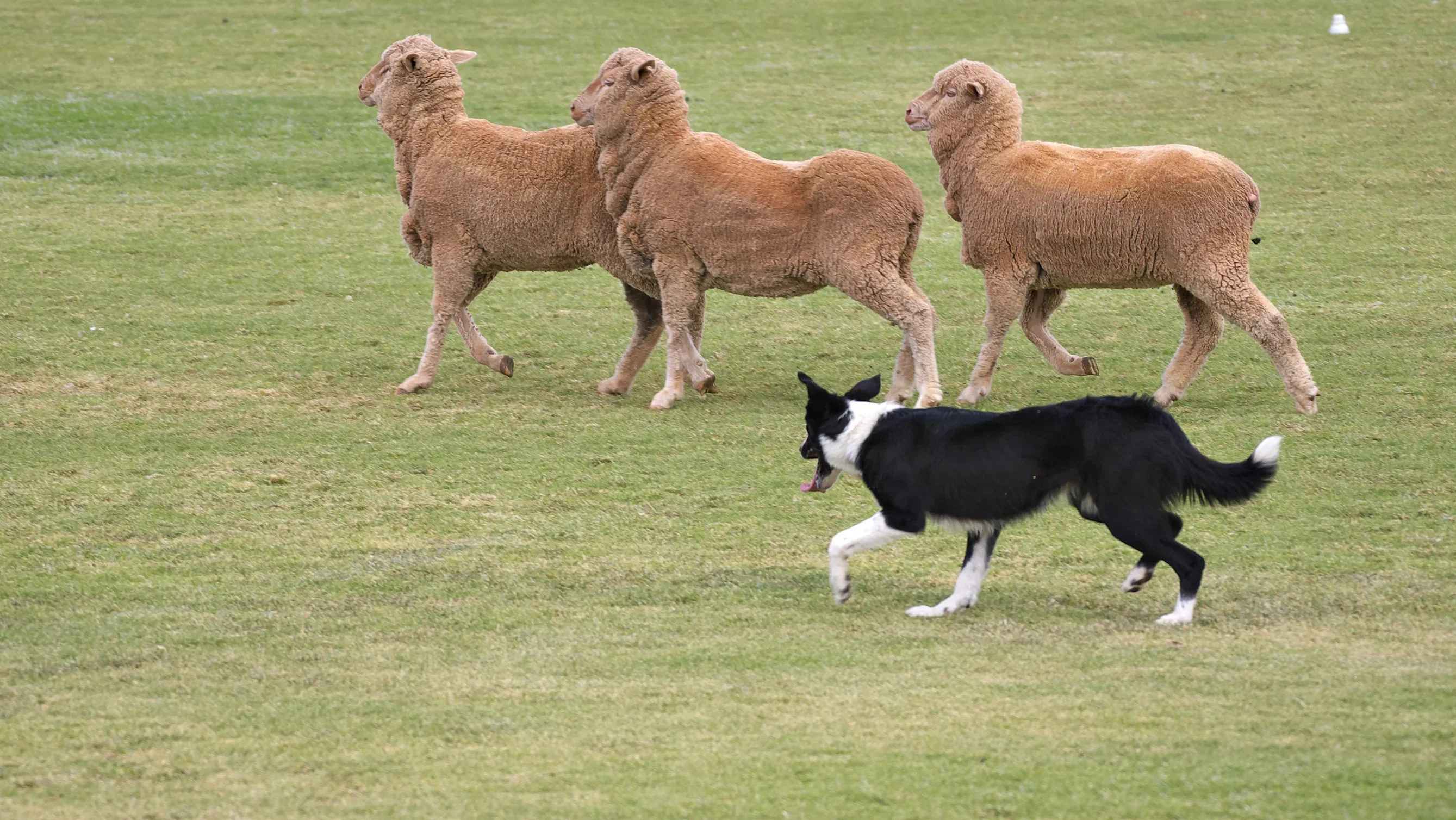
Somewhere in a wide-open field in Northern California, a Border Collie is locked in a stare so intense it could bore a hole through granite. Four hundred yards away, a small cluster of sheep shifts uneasily. The dog hasn’t moved. It doesn’t need to. That stare — what handlers call “the eye” — is doing all the work. The sheep know what it means. They’ve been here before. And frankly, they’re not thrilled about it.
Welcome to the world of sheepdog trials, where the most athletic and intelligent dogs you’ll ever see perform feats of precision that would humble most professional athletes — while a handful of deeply unimpressed sheep do their level best to make it as difficult as possible.
What happens on course
A sheepdog trial tests real ranch skills in a scored, timed format. The handler stands at a post and sends the dog on an “outrun” — a wide, sweeping arc of 350 to 500 yards to get behind the sheep without disturbing them. From there, the dog “lifts” the sheep (gets them moving) and “fetches” them in a straight line back to the handler, through a set of freestanding gates along the way. Then comes the drive: the dog pushes the sheep away on a triangular path through two more sets of gates. After that, the handler and dog must “shed” — separating specific sheep from the group inside a ring — and finally pen them in a small enclosure. All of this happens in under 12 minutes.
Scoring runs on a 100-point deduction system. Judges award 20 points for the outrun, 10 for the lift, 20 for the fetch, 30 for the drive, 10 for the shed, and 10 for the pen. Straight lines matter. A wobbling fetch line hemorrhages points. Miss a gate entirely and those points are gone. The drive phase alone carries 30 percent of the total score — and if you don’t complete it, you get nothing for it.
The dogs: Bred for brilliance
Border Collies dominate sheepdog trials for a reason rooted in biology. Through centuries of selective breeding, these dogs have developed an amplified version of the predatory stalk — a low crouch, head down, tail tucked, with that unblinking gaze fixed on the sheep. It’s a modified wolf behavior: the stalk and eye are cranked up while the grab-bite is bred out. The result is a dog that controls livestock through sheer psychological pressure rather than force.
The most remarkable skill is intelligent disobedience. When a handler’s whistle says “walk up” but the sheep are about to bolt, a great trial dog overrides the command and holds back. It reads the sheep’s body language — the subtle weight shifts, the ear positions, the moment a ewe decides she’s had enough — and makes real-time decisions that the handler, standing hundreds of yards away, simply cannot see.
At distance, voice commands are useless. Handlers use a small metal shepherd’s whistle held against the palate, each developing unique tone patterns for “come bye” (clockwise), “away to me” (counterclockwise), “lie down” (stop), and “steady” (slow down). The best runs unfold like a conversation between species — wordless, precise, and deeply satisfying to watch.
The sheep: Professional skeptics
Then there are the sheep. Trial sheep that have been through the course multiple times develop what can only be described as weaponized apathy. They know the dog won’t bite them. They know where the exhaust pen is. Some crowd around the handler’s legs and refuse to move, standing on the handler’s feet like furry, 150-pound protesters. Others learn the course so well they try to skip ahead to the pen before the drive even starts.
Handlers drawn for afternoon slots at multi-day trials face the most battle-hardened sheep — animals that have already been through the course that morning and have zero interest in doing it again. Morning handlers get fresh, flighty sheep that scatter at a sneeze. The luck of the draw is a real factor, and everyone who trials knows it.
Where to watch in California
California has a deep sheepdog trial tradition. The Redwood Empire Sheep Dog Association, based in Oroville, has been hosting trials since 1947 — one of the oldest trial organizations in the state. The Northern California Working Sheepdog Association runs regular trials at venues across the northern part of the state. Both organizations post schedules on their websites.
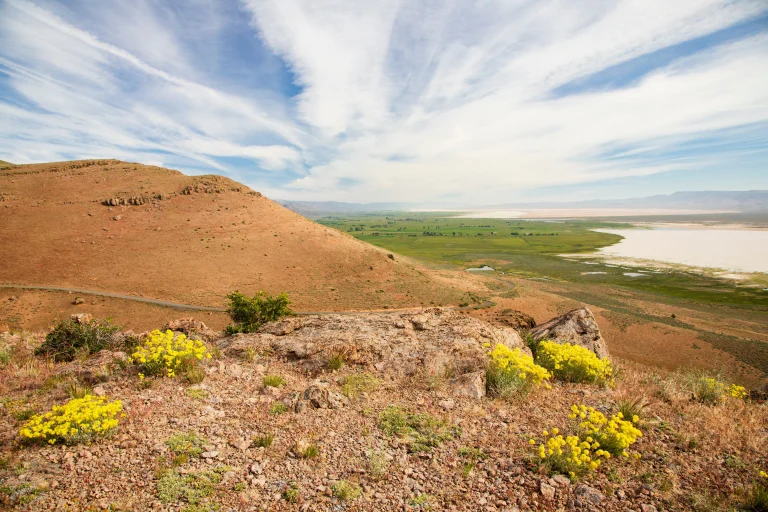
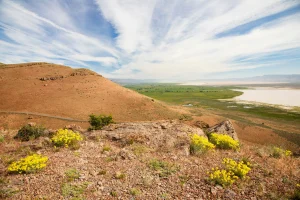
The biggest event on the calendar is the USBCHA National Sheepdog Finals, and in 2026 it returns to Alturas at the Lazy Spade Ranch in Modoc County, September 29 through October 4. The top 150 handler-dog teams from across North America qualify through a year’s worth of trials to compete. The Sunday championship round features an 800-yard double-gather course — two outruns, two lifts, and a course that would exhaust most dogs just to walk. Spectators are welcome and admission is typically free.
If you’re making the trip to Modoc County, it’s worth exploring the area. Read our guide to dog-friendly fun in Modoc County’s high desert. And for more on what makes working dogs extraordinary, don’t miss our story on a day in the life of the first “domesticated” dog.