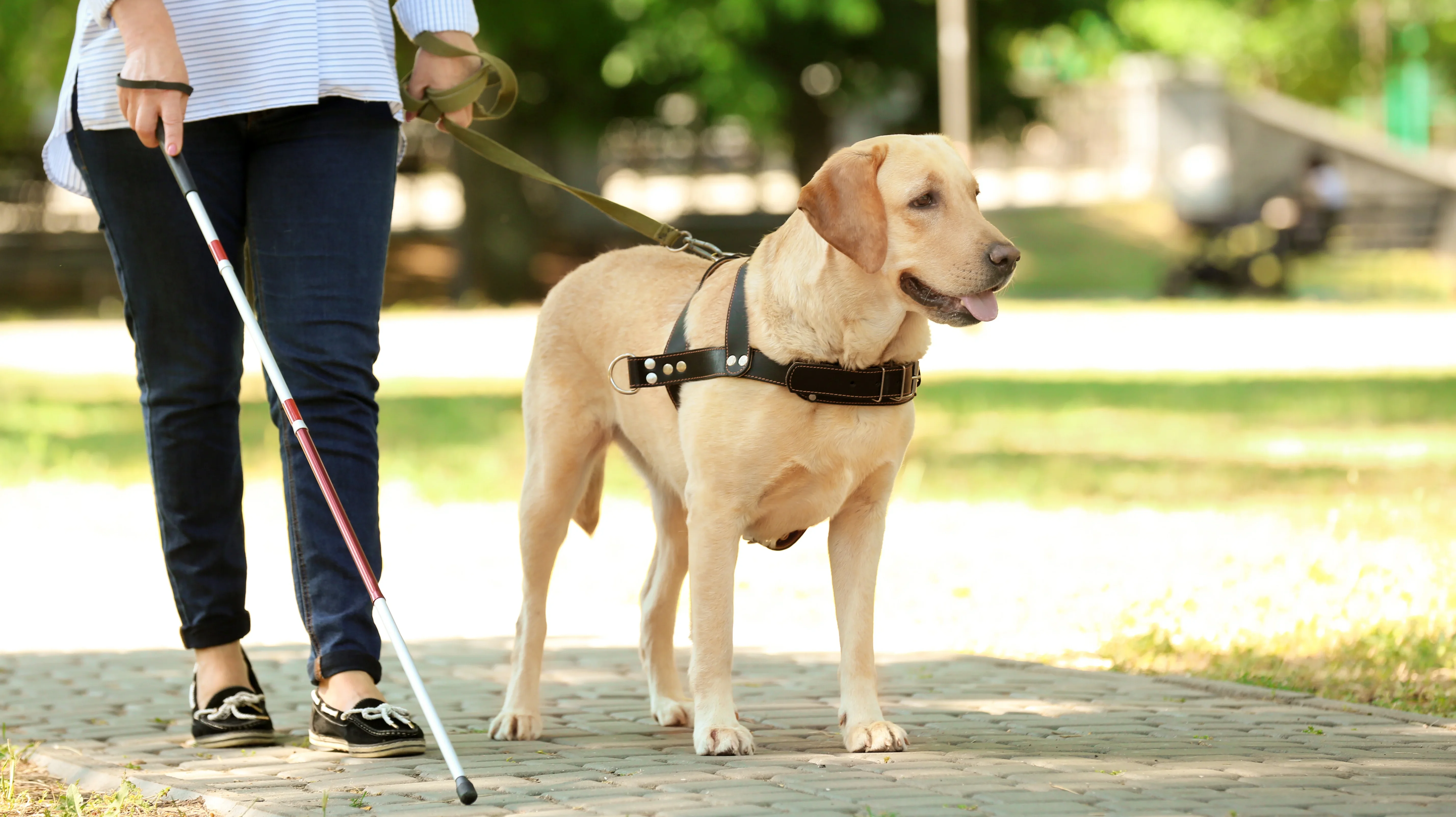
Most people see a guide dog walking calmly beside its handler and think the job looks effortless. It isn’t. Behind that steady pace is years of training, constant decision-making, and a level of focus that would exhaust most humans — let alone most dogs.
Guide dogs are among the most highly trained working animals in the world. And California has played an outsized role in their story. Guide Dogs for the Blind, one of the largest guide dog schools in North America, has been based in San Rafael since 1947. Thousands of dogs have graduated from that Marin County campus and gone on to transform lives across the country.
Here’s what a typical day actually looks like for one of these remarkable animals.
Morning: Routine is everything
A guide dog’s day starts early and predictably. Breakfast is served at the same time, in the same spot. After eating, the dog goes outside to relieve itself — on cue, in a designated area. This isn’t casual housetraining. Guide dogs are taught to eliminate on command so their handlers can manage the process without being able to see where the dog is going.
After the morning routine, the harness goes on. That harness is a signal the dog understands clearly: work mode. When the harness is on, the dog is not a pet. It’s navigating, problem-solving, and keeping its handler safe. When the harness comes off, the dog relaxes — plays, chews a toy, rolls on its back like any other dog.
Midday: Navigating the real world
The core of a guide dog’s job is route work — getting its handler safely from one place to another. This means walking at a consistent pace, stopping at curbs, navigating around obstacles (including ones at head height that the dog itself could walk under), and refusing commands that would put the handler in danger.
That last skill is called intelligent disobedience, and it’s one of the hardest things to train. If a handler says “forward” but a car is approaching, the dog must override the command and stay put. The dog has to judge the situation, weigh it against training, and make the right call in real time. It’s a remarkable cognitive task for any animal.
Between work sessions, the dog rests — usually lying quietly under a desk at the handler’s workplace or beside a chair at a restaurant. Guide dogs are trained to settle in public spaces without fussing, begging, or reacting to other dogs, food on the floor, or sudden noises.
The training pipeline
Guide dogs don’t arrive at this level of skill overnight. The process typically takes about two years. Puppies are placed with volunteer puppy raisers — often families — who socialize them extensively: grocery stores, buses, restaurants, crowded sidewalks, elevators, escalators. The goal is a dog that’s confident and calm in any environment.
At around 13 to 15 months, the dog returns to the guide dog school for formal harness training, which lasts several months. Not every dog makes it. Schools like Guide Dogs for the Blind report graduation rates around 45 to 47 percent. Those that don’t are “career changed” — adopted as pets or placed in other service roles.
For California dog lovers, this matters. Puppy raising programs operate across the state, and career-change dogs are available for adoption. If you’ve ever wanted a superbly trained, well-socialized dog, these programs are worth exploring.
Evening: Off duty
When the harness comes off at the end of the day, a guide dog becomes, well, a dog. It plays. It seeks affection. It might have a favorite squeaky toy or a preferred spot on the couch. Handlers describe the personality shift as immediate and unmistakable — the working dog’s intense focus gives way to goofiness, cuddling, and the full range of dog behavior we all recognize.
This balance is essential. Guide dogs need downtime to decompress from the mental demands of the job. A dog that’s always “on” will burn out. The best guide dog teams understand this and make sure the dog gets genuine relaxation every day.
What travelers should know
If you encounter a guide dog while traveling in California, the most helpful thing you can do is nothing. Don’t pet, talk to, or make eye contact with a working guide dog. Don’t offer food. Don’t let your own dog approach. The handler’s safety depends on the guide dog’s focus, and well-meaning distractions can genuinely put someone at risk.
Under the Americans with Disabilities Act, guide dogs are permitted in all public spaces — hotels, restaurants, trails, beaches, shops — with no pet fees and no breed or size restrictions. This is federal law, not a courtesy. If you see a business turning away a guide dog team, that’s a civil rights violation.
For more on navigating these situations respectfully, read our guide to service dog etiquette for pets and people. And if you’re looking for accessible outdoor adventures that work well for guide dog teams, check out our list of ADA accessible and guide dog friendly trails in California.
A different kind of bond
The relationship between a guide dog and its handler is unlike any other human-animal bond. It’s built on absolute trust, daily interdependence, and a shared language that develops over years of working together. The dog isn’t just a companion — it’s the handler’s eyes, their navigator, their safety net in a world designed for sighted people.
For the rest of us who travel with dogs purely for the joy of it, guide dogs offer a useful reminder: these animals are capable of far more than we usually ask of them. The intelligence, patience, and dedication a guide dog brings to its work every single day is extraordinary — and worth understanding, even if your own dog’s biggest daily challenge is deciding which end of the couch to nap on.
If you’re interested in how dogs have shaped human history, you might also enjoy our story on a day in the life of the first “domesticated” dog. And for a deeper look at the legal landscape, see the difference between emotional support animals and service animals.