
Drive north of Mendocino and something shifts. The redwoods get taller, the fog gets thicker, and the wildlife stops pretending you exist. A 900-pound bull Roosevelt elk grazing beside the road at Elk Meadow Day Use Area in Orick does not care about your Subaru, your itinerary, or your very good dog. That indifference is the whole magic of the North Coast — and it’s also why this stretch of California demands more of us than anywhere else we bring a leash.
This is the first in our Leave Only Paw Prints® series: practical, species-specific etiquette so you can keep bringing your dog north, not fewer of us.
Know where dogs can actually go
Redwood National Park and the three state parks woven into it (Prairie Creek, Del Norte Coast, Jedediah Smith) treat dogs very differently. In the national park units, dogs are restricted to campgrounds, picnic areas, paved roads, and a few fire roads — not the trails under the big trees. Prairie Creek Redwoods SP is the same story. That’s not bureaucratic fussiness; those trails cut straight through a resident Roosevelt elk herd with calves.
Plan dog hikes on the beach corridors, the Coastal Trail sections that allow dogs, and Six Rivers NF fire roads. Save the cathedral groves for a solo morning.
Roosevelt elk: 75 feet, no exceptions
Cows with calves will charge a dog. Bulls in September–October rut will charge anything. CDFW and the park service both ask for 75 feet minimum — roughly five car lengths. If you round a bend at Elk Meadow and find the herd on trail:
Script: Stop. Short-leash the dog against your leg, not out front. Back away the way you came — do not cut sideways into brush where a calf may be bedded. If an elk steps toward you, keep backing, get a vehicle or a big tree between you, and let it pass. Never let the dog vocalize; a bark reads as a coyote, and a cow elk will commit.
Black bears and mountain lions
Humboldt and Del Norte have healthy populations of both. A loose dog that bolts after a bear cub or surprises a lion on a deer kill is the single most common way this ends badly. Leash on, six feet, full stop. If you meet a bear: pick up small dogs, keep big dogs behind you, talk low, back away. If you meet a lion: same, but get bigger — arms up, jacket open, hold ground, throw rocks if it steps closer. Never run, never let the dog give chase.
The beach is wildlife too
MacKerricher State Park near Fort Bragg has a harbor seal rookery that pups from late winter into spring; a disturbed mom will abandon a pup for the tide. Give hauled-out seals 300 feet and keep dogs leashed past the headland.
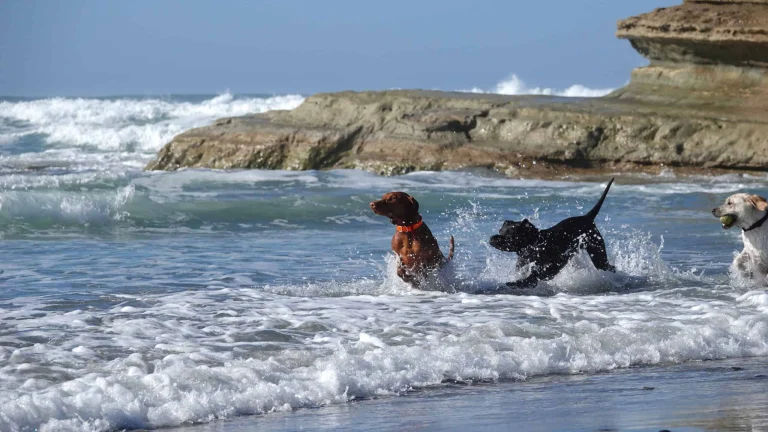
Clam Beach and stretches of the Humboldt coast are western snowy plover nesting habitat — tiny birds, invisible nests in the wrack line above the high-tide mark. One off-leash sprint through dry sand can crush a clutch. Walk the wet sand, leash up through posted areas, and skip those beaches entirely April through September if your dog won’t hold a recall.
Why this matters for the next trip
Every clean encounter — dog leashed, elk undisturbed, plover chick fledged — is the argument for keeping North Coast trails, beaches, and towns dog-welcoming. Pack a six-foot leash, a short traffic lead, and the 75-foot rule. The redwoods will still be there next weekend. So will the elk.