Step off a Palm Springs trail into what looks like bare dirt and you may have just crushed a 100-year-old living thing. The California desert isn’t empty — it’s just quiet about how alive it is. That changes how we travel here with dogs, and it’s the reason this stop on our Leave Only Paw Prints® series is all about the Greater Palm Springs and Coachella Valley deserts.
The Crust You Can’t See
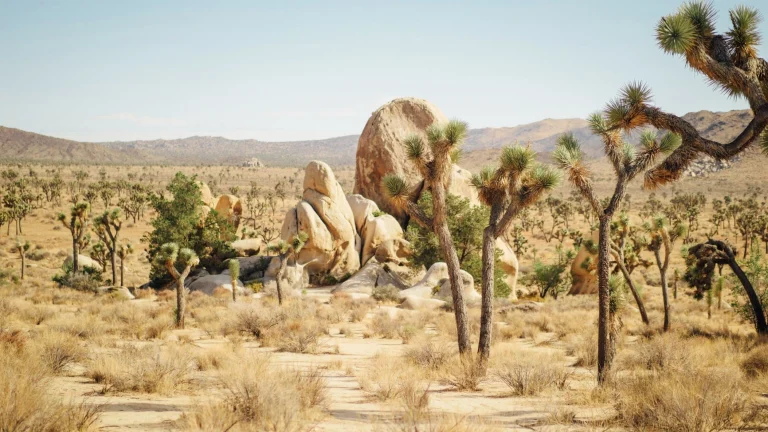
Biological soil crust — sometimes called cryptobiotic or cryptogamic soil — is a living skin of cyanobacteria, lichens, and mosses that binds desert sand, fixes nitrogen, and holds moisture. The USGS and National Park Service both flag it as one of the slowest-recovering ecosystems on the continent: a single boot print or paw print can take anywhere from a few years to re-stabilize, and full recovery of mature crust can run 50 to 250 years. You’ll find it across Mojave National Preserve, the perimeter of Joshua Tree, Anza-Borrego, and the Coachella Valley Preserve just north of Palm Springs.
That’s why “stay on trail” hits different out here. A Sierra meadow bounces back in a season. A crushed patch of desert crust may not look right again in your dog’s lifetime, your lifetime, or your grandkids’.
Heat: The Ground Is Lying to You
Air temperature is a polite fiction in the desert. When the air reads 85°F, asphalt routinely measures 135°F+; dark sand and rock in direct Coachella Valley sun can push past 150°F by noon. A useful rule: press the back of your hand to the surface for seven seconds. If you can’t, your dog can’t walk on it. Paw pads burn fast and silently — dogs often keep going because you’re going.
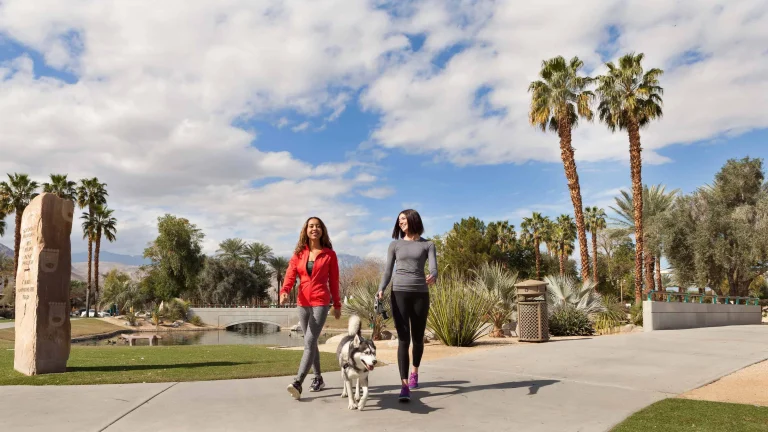
Palm Springs has leaned into this hard. The city’s long-standing heat ordinance prohibits leaving dogs tethered or unattended outdoors in dangerous heat, and local vets will tell you the ER spikes every time a well-meaning visitor hikes Museum Trail at 10 a.m. in July. From May through September, treat anything after 8 a.m. as off-limits for dogs. Dawn hikes, shaded canyons, and hotel pool afternoons are the play.
Where Dogs Actually Belong Out Here
Joshua Tree National Park is famously restrictive — dogs on roads and campgrounds only, no trails. But the region around it is generous:
- Coachella Valley Preserve (Thousand Palms) — leashed dogs welcome on most trails; stay strictly on tread, the crust here is textbook.
- Whitewater Preserve — leashed, shaded by the river, cooler than the valley floor by 10°F on a good morning.
- Big Morongo Canyon Preserve — dogs allowed on the marsh boardwalk and select trails; check current signage.
- Indian Canyons (Agua Caliente tribal land) — leashed dogs permitted with a per-dog fee; Andreas and Murray Canyons offer real shade and water.
Desert Trail Etiquette, Short Version
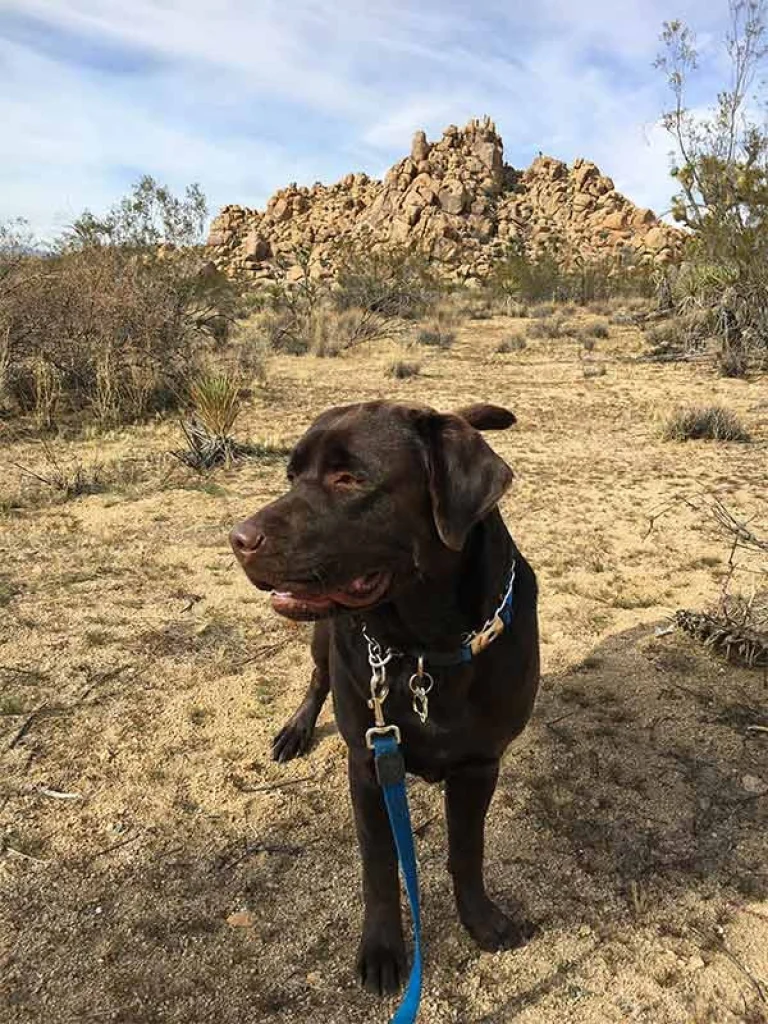
Leash on. Paws on tread, not on crust. Water for both of you — a gallon minimum for a half-day. Boots or pads if you’re anywhere near exposed rock after 9 a.m. Pack out waste; desert microbes don’t break it down the way forest soil does. And if the trail widens into a braided mess of use-paths, pick the most established line and hold it — every parallel track is a new wound.
The Long View
The desert rewards people who move through it lightly. Get the hours right, read the ground, and your dog gets a lifetime of Coachella sunrises. Next in the series: coastal bluffs, nesting shorebirds, and why your recall matters more than you think.