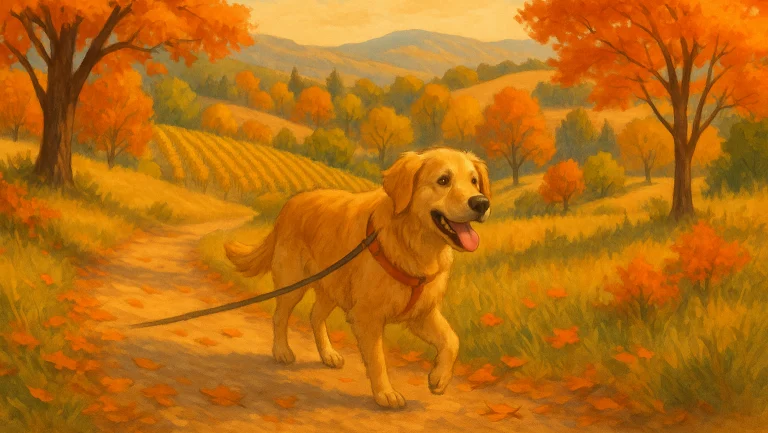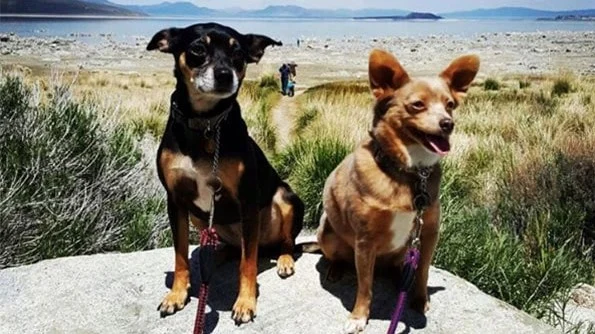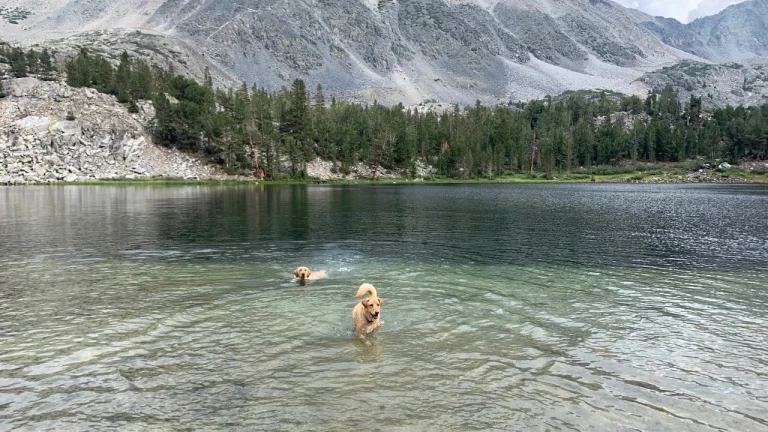
Cross Donner Summit with a dog in the back seat and the rulebook changes under your tires. The Bay Area trains us to clip the leash and keep it clipped. East of the crest, on most National Forest land, a well-trained dog can legally hike at your heel with no leash at all. That freedom is real — and it’s the first installment of our new Leave Only Paw Prints® series on doing it right.
Three Federal Agencies, Three Rulebooks
The land under your boots decides the rules, not the trail sign at the parking lot.

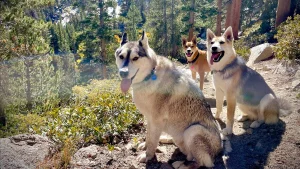
USFS (Forest Service) — Inyo, Eldorado, Tahoe, Stanislaus, Humboldt-Toiyabe. Dogs are welcome on nearly every trail, leashed or under voice control. Developed campgrounds require a leash; the backcountry generally doesn’t.
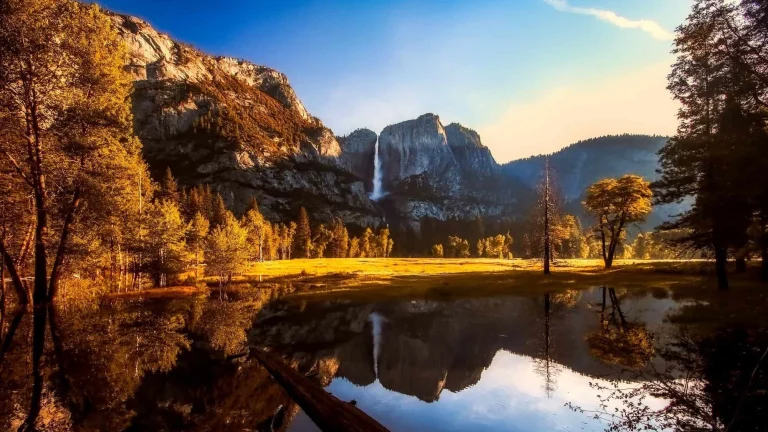
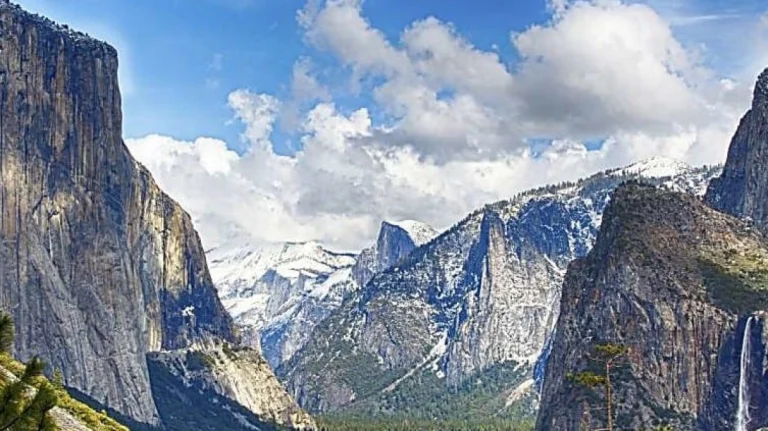
NPS (National Park Service) — Yosemite, Sequoia, Kings Canyon, Lassen. Effectively no-dog zones. Dogs are banned from every dirt trail, every meadow, every wilderness area. Paved roads, paved paths, and developed campgrounds only, always leashed. The BARK program (Bag your waste, Always leash, Respect wildlife, Know where you can go) is the polite version of “please leave your dog in the car.”
BLM — Alabama Hills, the Bodie Hills, swaths of the foothills. Similar to USFS: leashed or voice-controlled in most areas, with specific exceptions posted at trailheads.
What “Voice Control” Actually Means
The NPS, when it does allow voice control, defines it plainly: your dog responds to a verbal command immediately, every time, around distraction. Not usually. Not when she feels like it. Every time — with a deer bounding across the trail, with a mountain biker coming downhill fast, with a marmot twenty feet off the path.
Most dogs are not there. That’s not shame, that’s math. A recall that works in your backyard is not a recall that works at Saddlebag Lake in elk season. If you’re honest about where your dog is on that curve, you know whether today is a leash day or a freedom day.
Where to Actually Go
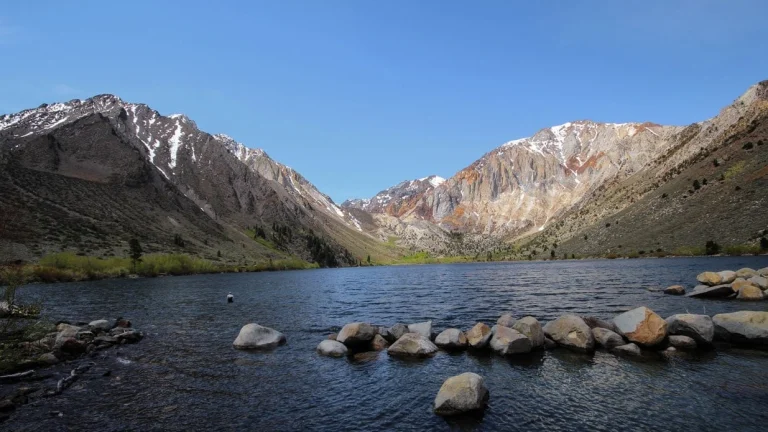
Inyo National Forest — the Eastern Sierra crown jewel for dog-legal off-leash. Little Lakes Valley out of Mosquito Flat, Convict Lake’s upper loop, the McGee Creek drainage, and the Virginia Lakes basin all allow voice-controlled dogs. Carry water; the granite bakes.
Eldorado & Tahoe National Forests — the Rubicon corridor, Loon Lake, and most of the Crystal Basin. Desolation Wilderness is legal for dogs but requires a wilderness permit and day-use quota — plan ahead.
Gold Country — Tahoe NF land above Auburn and around Coloma offers quieter trails along the American River’s north and middle forks. Verify the parcel before unclipping; state parks in the region (Marshall Gold, Auburn SRA) require leashes.
E-Collars and GPS: Responsibility, Not Cheating
A modern e-collar used correctly — low-stim, pre-conditioned, paired with a GPS tracker like Garmin Alpha or Tractive — is the difference between hoping and knowing. It is legal on federal land in California. It’s not a shortcut around training; it’s the proof that the training took. The owners running dogs cleanly off-leash in the Sierra almost all have one on the collar, even when the dog hasn’t needed a correction in months.
Earn It, Then Enjoy It
Next in the series: a weekend itinerary pairing Mammoth Lakes lodging with three voice-control-legal trails — and the gear list that makes it honest. Until then, drive east, train hard, and keep the paw prints the only thing you leave.