Few corners of dog travel generate as much bad information as service dogs. Hotel clerks turn away people they’re legally required to admit. Meanwhile, a brisk online trade in vests and “certificates” convinces folks they can take any dog anywhere. Both problems come from the same root: almost nobody has read the actual rules. So here they are, in plain English, for California. (This is a traveler’s guide, not legal advice — when in doubt, the agencies below have the final word.)
What counts as a service dog
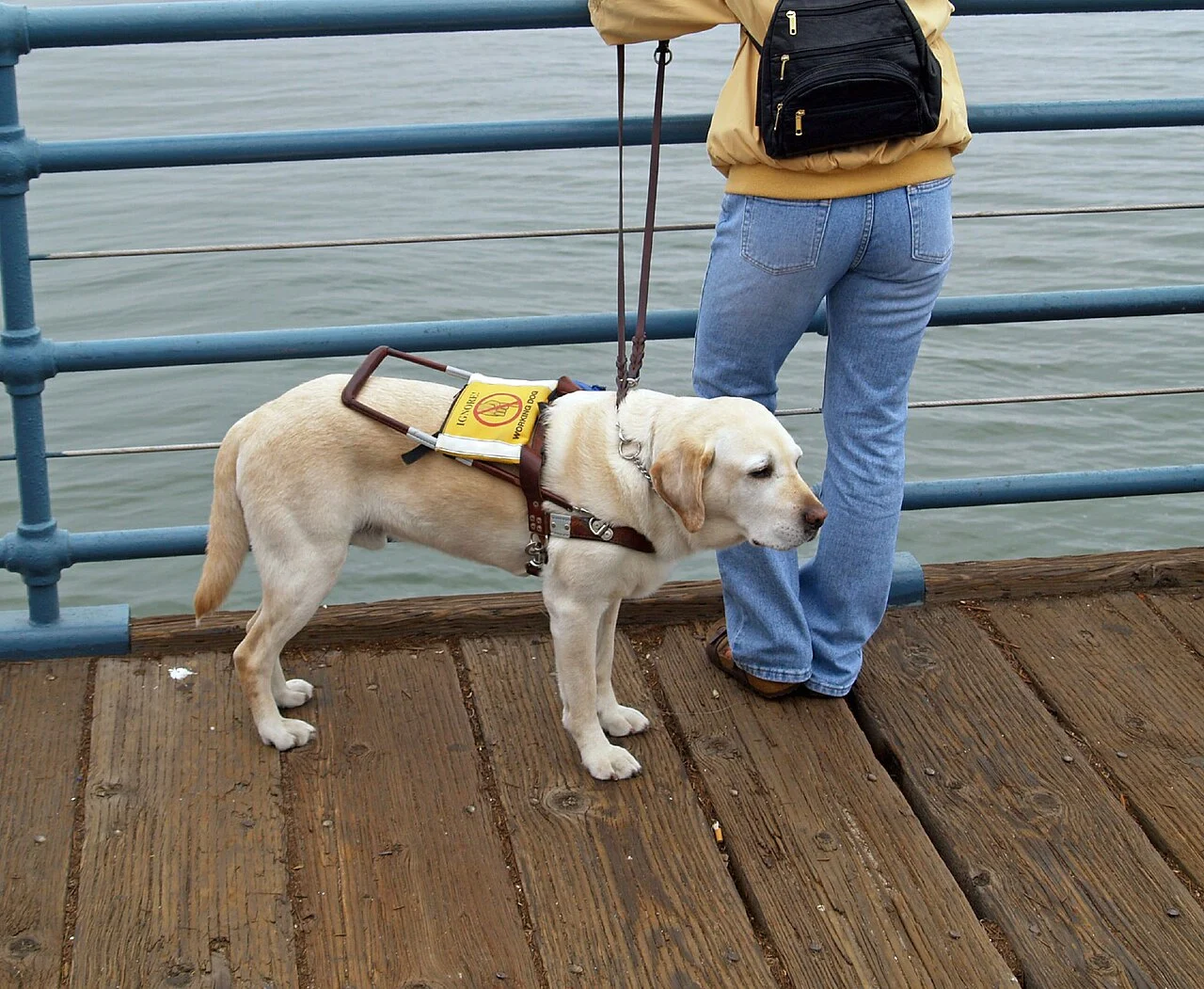
Under the federal Americans with Disabilities Act, a service animal is a dog individually trained to do work or perform tasks for a person with a disability. The key word is tasks — guiding someone who’s blind, alerting to a seizure, interrupting a panic attack, retrieving dropped items, bracing a person who’s unsteady. The work has to be tied to the disability.
What doesn’t count: a dog whose only job is comfort. Emotional support animals are wonderful, and they have real protections in housing — and, until a 2021 federal rule change, on flights — but in a restaurant, hotel lobby or store they do not carry the public-access rights a service dog does. California follows the federal line here. Psychiatric service dogs — trained to perform specific tasks for a mental-health disability — do qualify; an untrained comfort dog does not.
The only two questions a business can ask
This is the part worth memorizing, because it cuts both ways. When it isn’t obvious what a dog does, staff may ask exactly two things:
- Is the dog required because of a disability?
- What work or task has the dog been trained to perform?
That’s the whole list. A business cannot ask about your disability, demand a doctor’s note, require an ID card or “registration,” or make the dog demonstrate its task. Those online registries and certificates? They prove nothing and are required by nobody. If a hotel insists on paperwork before letting your service dog into the room, they’re on the wrong side of the law — politely, that’s worth saying out loud.
Where your service dog can go in California
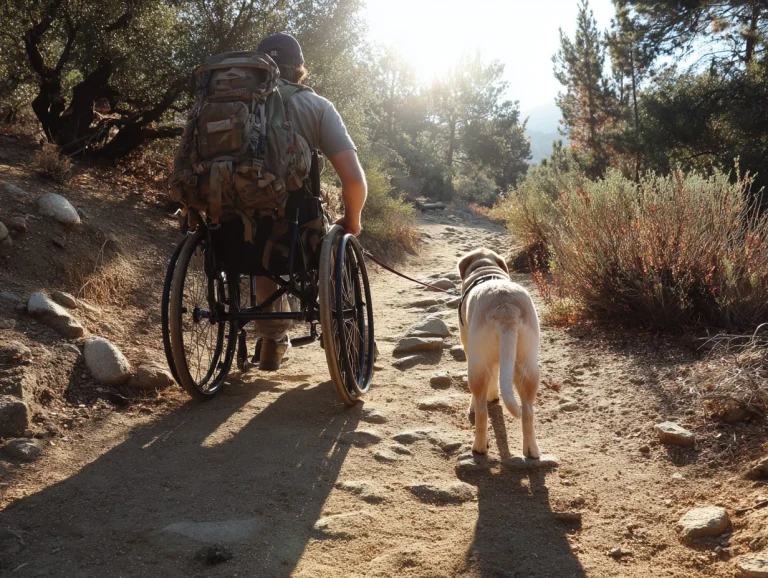
Just about everywhere the public is welcome. California’s Disabled Persons Act layers onto the ADA to guarantee access to hotels, restaurants, stores, public and private transportation, and other places open to the public. That includes spots that ban regular pets — the no-dogs sign at a beach or a state-park trail does not apply to a trained service dog. California State Parks spells this out directly: service dogs are allowed in areas where pets are not.
There are sensible limits. Your dog has to be under control — leashed or harnessed unless that interferes with the work — and housebroken. A business can ask a genuinely out-of-control or disruptive dog to leave, but it can’t toss the whole category on a hunch.
Service dogs in training get a California break
Here’s where California is more generous than federal law. The ADA doesn’t cover dogs still in training, but California does: a dog being trained to provide a disability-related service may go into public places for that training. The catch is that the dog must be leashed and wear a county-issued tag identifying it as a service or assistance dog in training. If you’re raising a future guide or service dog, that tag is your friend.
Faking it is a crime
Strapping a $20 vest on the family Lab to sneak it into a hotel isn’t a harmless shortcut. Under California law, knowingly misrepresenting a dog as a trained service animal is a misdemeanor — punishable by up to six months in jail and/or a fine of up to $1,000. Beyond the legal risk, every fake service dog that lunges, barks or has an accident makes life harder for the people whose dogs are doing real, life-sustaining work. The vest economy is exactly why clerks get suspicious in the first place.
How to be a good neighbor on the trail
If you travel with a pet, not a service dog, the kindest thing you can do is give working teams room. Don’t let your dog rush up to a service dog — it’s on the clock, and a distraction can put its handler at real risk. Don’t pet it, whistle at it or ask “what’s wrong with you?” For the full etiquette rundown, see our guide to service dog etiquette for pets and people and our profile of a day in the life of a guide dog.
Knowing the rules makes the whole system work better — for handlers, for businesses and for the rest of us who just want to travel with our dogs. Ready to put it to use? Start with the beaches — our guide to wheelchair-accessible, dog-friendly beaches in California shows which spots open up when the rules are clear. Then head back to our accessible dog lover’s guide to California for the full picture.
Sources worth bookmarking: Disability Rights California’s service-animal fact sheet, the California Department of Justice service-animal guidance, ADA.gov’s service-animal requirements, and California State Parks’ service-animal page.