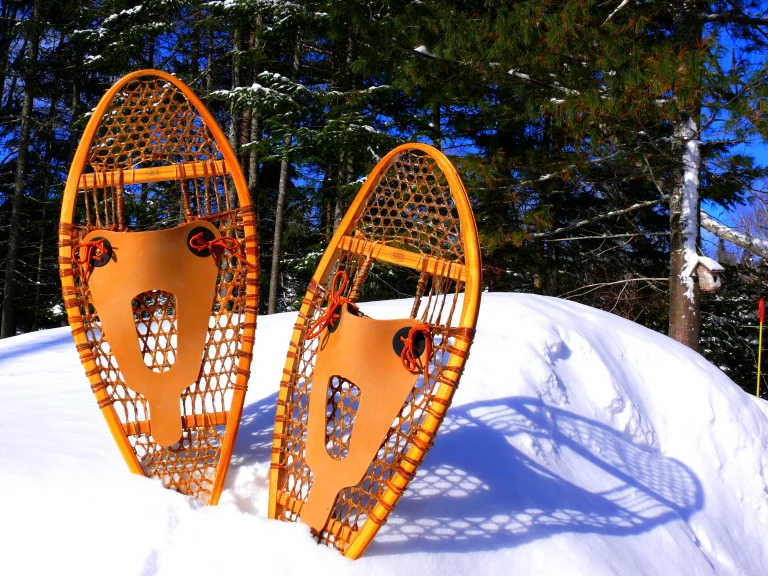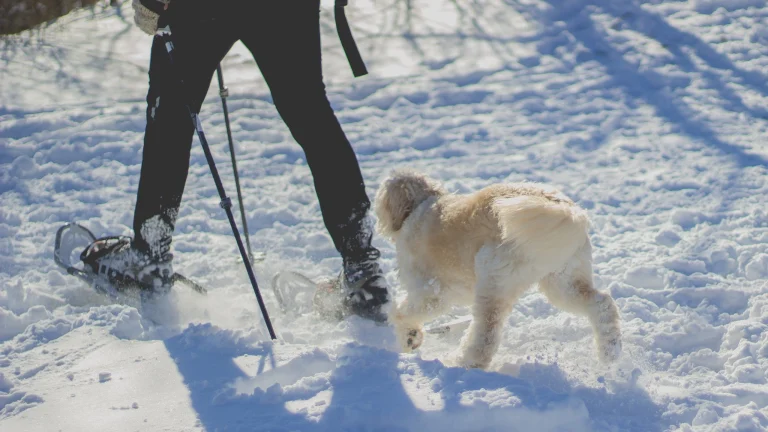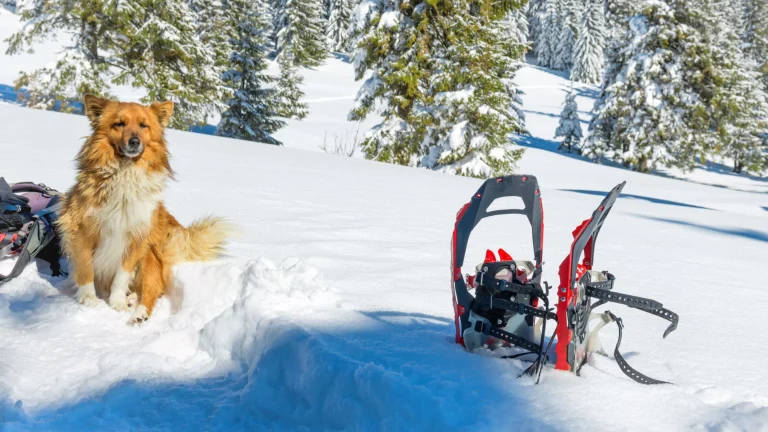
If you haven’t tried snowshoeing, what are you waiting for? You don’t have to invest in your own equipment if you’re new to the activity. Snowshoes are available for rent from most ski shops; all you need are some warm snow boots. On designated trails with packed snow and flat terrain, walking in snowshoes is almost as easy as walking in street shoes.
Among popular venues for dog-friendly snowshoe excursions in the Tahoe area are Blackwood Canyon Road, Echo Lakes, Meeks Creeks, Paige Meadows, Fallen Leaf Lake Trail, North Tahoe Regional Park, Big Meadow, the Squaw Valley Golf Course and Tahoe Meadows. Another great choice is Hope Valley, where 60 miles of groomed trails (some designated for cross-country skiing) are available at no fee. Park and get started at Hope Valley Outdoors, where the vibe is dog-friendly and the local advice right-on.
Several developed cross-country ski areas, including Kirkwood XC & Snowshoe Center and Tahoe Cross Country, welcome canine-accompanied snowshoers on designated trails, for a fee.
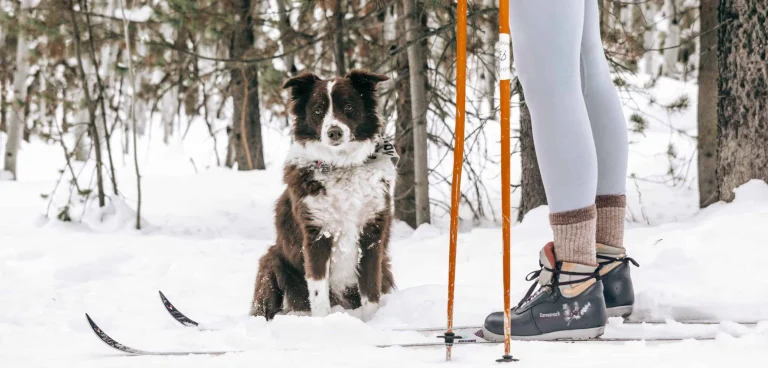
So how do you snowshoe with a dog in leash-required areas when you have a pole in each hand? Tie a leash around your waist until you get to an area where you can unclip. Better yet, invest in a hands-free leash solution such as a skijoring rig consisting of a hip belt attached to a bungee towline that will allow your dog or dogs to move ahead of you while you keep your hands on the poles (these rigs are great for cross-country skiing and summer hiking, too).
A note about etiquette: Stay away from groomed cross-country ski tracks, as trampling them makes the going difficult for skiers and creates ill will between user groups.
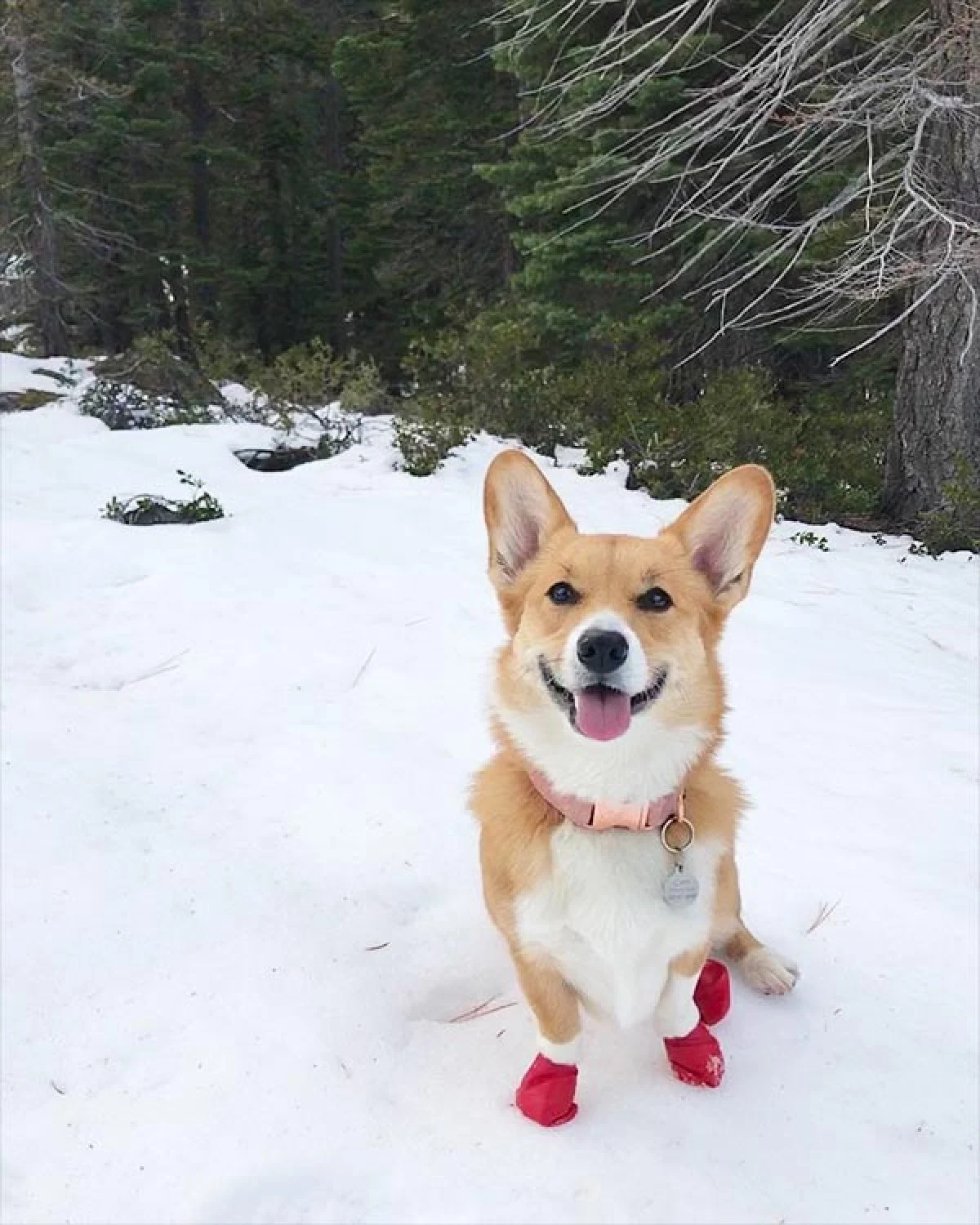
One more thing to keep in mind: snowshoeing is more of a workout than it looks, for you and your dog alike. Dogs burn extra energy plowing through deep snow, so bring plenty of water and some high-calorie treats to keep their energy up. Watch for signs of cold stress—shivering, lifting paws off the snow, or reluctance to keep moving. Short-coated breeds may benefit from a dog jacket, and booties help prevent ice-ball buildup between toe pads. Start with a shorter route if your dog is new to snow travel, and you’ll both have a better time.
Photo Credit: @corgeouss