The Inland Empire doesn’t get much camping love in the usual roundups, which is a mistake. The San Bernardino Mountains sit 90 minutes from most of Southern California, and the range from lakeside USFS campgrounds to free dispersed camping means there’s an option for every budget and comfort level. Here’s where to go, what the dog rules actually are, and when to show up.
Serrano Campground at Big Bear Lake
Serrano is the most popular campground at Big Bear, and for good reason: it sits directly on the north shore of Big Bear Lake with 132 sites, flush toilets, hot showers, and a short walk to the water. It’s run by the U.S. Forest Service and reservable through Recreation.gov.
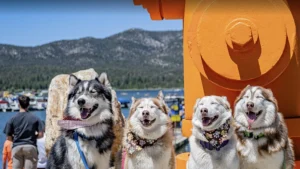
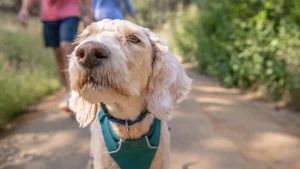
Dogs must be leashed (six-foot maximum) and attended at all times. They’re allowed on the Alpine Pedal Path, a paved trail that follows the north shore, and on forest roads around the campground. They’re not allowed on most single-track trails in the San Bernardino National Forest — check the specific trail before heading out.
Sites run $30 to $40 per night depending on location. The campground typically opens in May and closes in October. Elevation is 6,800 feet, so nights are cold even in summer. Book early — weekends from June through August sell out months ahead.
Holcomb Valley: Free Dispersed Camping
If you want to skip the reservation system and the fees, Holcomb Valley is the move. This area north of Big Bear Lake offers dispersed camping along dirt forest roads — no reservations, no facilities, no cost. You pick a spot, set up, and leave it cleaner than you found it.
Dogs must be leashed per forest regulations, but the practical reality is wide-open space with few other campers midweek. The road in (3N16/Holcomb Valley Road) is dirt but passable for most vehicles in dry conditions. High-clearance helps.
Bring everything: water, firewood (if fire restrictions allow), and a plan for waste. There are no trash cans, no water sources, and no cell service. That’s the appeal. Best from May through October — the road may be snowed in or muddy outside that window.
Green Valley Lake: The Quieter Alternative
Green Valley Lake sits at 7,000 feet about 15 minutes from Big Bear, and it feels like a different mountain. The town is tiny, the lake is small, and the campground (Green Valley Campground, USFS) has just 36 sites. Dogs on leash, standard forest rules.
The advantage here is the lack of crowds. Big Bear draws the weekend hordes; Green Valley draws people who want quiet. The lake allows fishing and non-motorized boats. The surrounding forest has fire roads suitable for leashed dog walks.
Sites are first-come, first-served and cost about $24 per night. The campground has vault toilets and potable water. Open roughly May through November, weather depending.
Dogwood Campground Near Lake Arrowhead
Dogwood is a USFS campground in the Rim of the World area near Lake Arrowhead. It has 93 sites, flush toilets, and a general store within walking distance. The campground sits in dense pine forest at about 5,600 feet — shaded and cool, even in July.
Dogs are welcome on leash throughout the campground and on nearby fire roads. Lake Arrowhead itself is private (residents only for water access), but the surrounding forest offers plenty of walking. The Heap’s Peak Arboretum trail, about a mile from camp, is a short interpretive walk through old-growth forest — check locally whether dogs are allowed on that specific trail.
Reservations through Recreation.gov. Sites are $30 to $36 per night. Open May through October.
Joshua Tree: Be Honest About the Restrictions
We’d love to tell you Joshua Tree National Park is great for dog camping. The campgrounds are stunning, the desert is otherworldly, and the rock formations are like nothing else in California. But the dog rules are strict: dogs are allowed only on paved roads, in campgrounds, and within 100 feet of your car. No trails. No backcountry. No exceptions.
If your dog is content hanging out at camp while you do short hikes, it can work. Black Rock Campground on the park’s northwest edge has potable water, flush toilets, and 100 sites. It’s also the closest campground to the town of Yucca Valley, where you can get supplies.
Sites are $25 per night, reservable through Recreation.gov. The park entrance fee is $30 per vehicle. Best season is October through April — summer temperatures regularly exceed 110 degrees.
Rancho Jurupa Regional Park (Riverside)
If mountain camping isn’t your thing, Rancho Jurupa Regional Park in Riverside offers flat, riverside camping at 4,800 Crestmore Road. The park sits along the Santa Ana River and has 66 campsites, a small lake, and trails through cottonwood groves.
Dogs on leash are welcome throughout the park. The river access is the highlight — shallow, calm sections where dogs can wade without current concerns. The park also has a disc golf course and fishing pond.
Sites run $25 to $40 per night with hookups available. Reservations through the Riverside County Parks website. This is a lower-elevation campground (about 800 feet), so it works year-round but gets hot in summer.
Mount San Jacinto State Park (Idyllwild Area)
Idyllwild sits at 5,400 feet in the San Jacinto Mountains above Palm Springs. The town itself is famously dog-friendly — Mayor Max, the golden retriever, served as honorary mayor for years. Mount San Jacinto State Park‘s campgrounds include Idyllwild Campground and Stone Creek Campground, both with developed sites in pine forest.
Dogs must stay on fire roads and paved areas within the state park — no backcountry trails. However, the adjacent San Bernardino National Forest has additional trails where leashed dogs are allowed. The Ernie Maxwell Scenic Trail (2.6 miles, easy) is a popular dog-friendly option that starts near the Idyllwild Nature Center.
State park sites are $25 to $35 per night, reservable through ReserveCalifornia.com. Open year-round, though winter may bring snow and chain requirements on Highway 243.
What to Pack for Mountain Camping With Your Dog
Water: Mountain creeks look clean but can carry giardia. Bring a bowl and enough water for your dog — plan on one ounce per pound of body weight per day as a baseline, more if it’s warm or you’re hiking.
Layers: Elevation drops nighttime temperatures fast. Big Bear can be 80 degrees at noon and 40 degrees by midnight. Your dog may need a jacket if they have a thin coat.
Leash and tie-out: A 15-foot tie-out cable with a stake gives your dog more range at camp while keeping you in compliance. Most USFS campgrounds require a leash of six feet or less, but a tie-out at your campsite is generally fine.
First aid: Tweezers for foxtails and cactus spines. Booties or paw wax for rocky terrain. Benadryl (check with your vet on dosage) for rattlesnake encounters — not as a treatment, but to buy time while you get to a vet.
ID and records: Carry proof of current rabies vaccination. Some campgrounds check. All should.