
Short answer: Yes, your California dog can get leptospirosis — and the latest peer-reviewed research puts Northern California, the Bay Area, and the Sierra foothills at the top of the state’s risk map. The good news: lepto is now a core vaccine for nearly all dogs, and the vaccine’s side-effect rate is much lower than long-standing rumor suggests.
This is the disease we get the most questions about from owners who hike around Marin, Sonoma, the East Bay open spaces, and the foothills above Sacramento — especially in the rainy months. Here is what California-specific science actually says.
What leptospirosis is, and how dogs catch it
Leptospirosis is caused by a family of corkscrew-shaped bacteria in the genus Leptospira. There are about 21 species and more than 250 disease-causing varieties, called serovars, per the Merck Veterinary Manual. Dogs pick it up by:
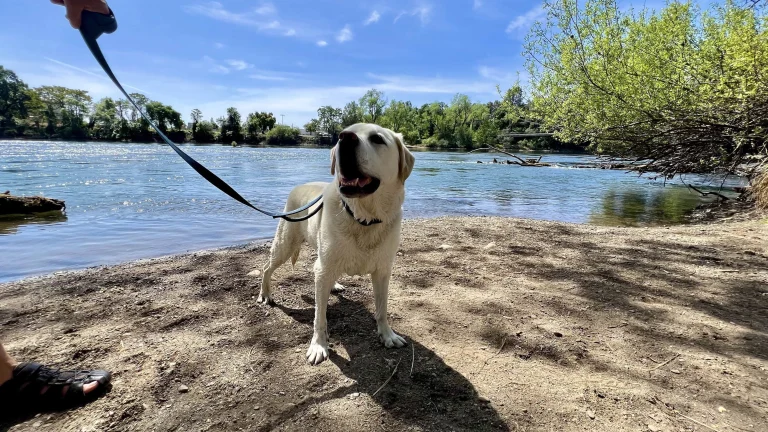
- Drinking from, swimming in, or wading through water contaminated with infected urine — especially stagnant puddles, slow streams, and flooded trails after rain
- Direct contact with the urine of infected wildlife (rats, mice, raccoons, skunks, opossums) or other dogs
- Exposure of broken skin or mucous membranes to contaminated soil
- Bite wounds from infected animals
The bacteria are tough. The AVMA notes they can survive “for weeks to months in urine-soaked soil.” Warm, wet, slow-moving water is the perfect reservoir — which is exactly the description of a Bay Area trail puddle in February.
Incubation is short: typically four to twelve days from exposure to the first symptoms.
Why California — and the Bay Area — is higher risk
A retrospective study of dogs treated in Northern California from 2001 to 2010 (Hennebelle et al., published in the Journal of the American Veterinary Medical Association) found the highest odds of leptospirosis in dogs living in the central or south coast (odds ratio 7.33) and the Sierra Nevada foothills (odds ratio 4.50). The dominant California serovar in that case series was Pomona — which strongly implicates wildlife exposure (rodents, raccoons, skunks, opossums) over urban dog-to-dog spread.
The AVMA also notes that leptospirosis in California “manifests in winter/early spring” — aligning neatly with the rainy-season puddles, flooded fire roads, and rodent-active wildland edges that define dog hiking around the Bay Area, the North Coast, and the wine-country open spaces.
And the old idea that lepto is only a rural disease is wrong. The American Animal Hospital Association explicitly counters it: leptospirosis “has the potential to occur in any dog (even in urban environments).” Urban Bay Area open spaces — Bernal Heights, the Berkeley hills, Mt. Davidson, Annadel above Santa Rosa — all support raccoon and opossum populations dense enough to seed contaminated puddles.
The vaccine: what it covers and how often
In 2022, AAHA reclassified the lepto vaccine as a core vaccine for most dogs — meaning the recommendation is now broad protection rather than risk-based selection.
The protocol most California vets follow:
- Initial series: Two doses spaced four weeks apart, with the first dose at or after 12 weeks of age
- Boosters: Annually for life
- Coverage: Modern quadrivalent (4-way) vaccines protect against the four most clinically relevant serovars in the U.S. — Icterohaemorrhagiae, Canicola, Grippotyphosa, and Pomona (which is the dominant CA serovar in the published case series above)
One important nuance from the AAHA guidelines: cross-protection between serovars is limited, so the 4-way version is preferred over the older 2-way for any dog at meaningful exposure risk. A peer-reviewed 2023 ACVIM consensus statement on canine leptospirosis (lead author Dr. Jane Sykes of UC Davis) confirmed this and is now the most authoritative U.S. reference for the disease.
Duration of immunity: 12 months. Plan the booster around your dog’s annual exam, ideally before the wet season starts.
Vaccine side effects: what the data actually shows
The lepto vaccine’s reputation for triggering reactions — especially in small dogs — is one of the most persistent myths in canine vaccinology. The actual numbers from peer-reviewed surveillance:
- The 2022 AAHA Canine Vaccination Guidelines: “Adverse reactions to leptospiral vaccines appear to be rare, with fewer than 53 adverse events per 10,000 doses.”
- A 2015 JAVMA study compared post-vaccine hypersensitivity reactions: 6.2 per 10,000 dogs without a lepto vaccine vs. 8.5 per 10,000 dogs that received one. The difference was not statistically significant.
- Small-dog risk does exist: dogs under 4.5 kg (about 10 lb) had a higher overall reaction risk — but this is true across all vaccines, not specific to lepto.
- The 2023 ACVIM consensus statement: “Protein content, concentrations, and severe adverse event rates are not higher for leptospirosis vaccines than distemper-parvovirus or rabies vaccines.”
If your dog is in one of the highest-exposure groups — small breed who walks suburban Bay Area trails after rain — the math on vaccinate-vs-skip strongly favors vaccinate. If you have specific concerns, talk them through with your veterinarian at the next exam.
Symptoms to watch for
Some dogs are completely asymptomatic. Many present early with vague flu-like illness that gets dismissed as “off.” The Merck Vet Manual describes the clinical course in two phases:
Early / acute (days 1–7):
- Lethargy, loss of appetite, vomiting
- Fever (usually 103–104°F)
- Muscle pain or stiffness
- Eye or nasal discharge
- Excessive thirst (polyuria/polydipsia) or sudden decrease in urination
- Abdominal pain
Late / severe:
- Acute kidney injury — the most common severe presentation in modern cases
- Liver failure with jaundice (yellowing of gums, eyes, skin)
- Bleeding disorders — petechial spots on gums, nosebleeds, dark/tarry stools
- Pulmonary involvement — coughing, difficulty breathing
If your dog shows any combination of fever, vomiting, lethargy, and changes in drinking or urination after a recent hike near water or wildlife — especially during California’s wet season — treat this as a same-day vet visit, not a wait-and-see.
Diagnosis and treatment
Diagnosing lepto is harder than most owners assume. The two standard tests:
- Microscopic agglutination test (MAT): Detects antibodies. A single acute MAT titer is only about 50% sensitive, so a convalescent sample two weeks later is needed for confirmation. Previous vaccination can muddy the results, per VCA Hospitals.
- PCR: Detects bacterial DNA directly. Must be done before antibiotics start. Sensitivity is roughly 25% on blood and 69% on urine in published data — testing both is standard practice.
The 2023 ACVIM consensus treatment is straightforward: doxycycline at 5 mg/kg every 12 hours for two weeks. Dogs that can’t tolerate doxycycline get an initial course of penicillin, then transition to doxycycline once they can keep it down.
Severe cases need hospitalization with IV fluids, electrolyte correction, antiemetics, and in the worst cases, oxygen, ventilation, or dialysis — the kind of care available only at large referral hospitals like the UC Davis VMTH or specialty centers in San Francisco, Sacramento, and San Diego.
Prognosis and recovery
The Northern California case series cited above reported an overall 13% mortality rate among diagnosed dogs, with hospital bills regularly exceeding $5,000. The most dangerous subtype is leptospiral pulmonary hemorrhage syndrome, which carries mortality up to 70% even with treatment.
Survivors of acute kidney injury can return to baseline kidney function — but some develop chronic kidney disease that requires lifelong management. Early diagnosis and treatment are the strongest predictor of full recovery, which is why “we hiked Annadel last weekend, near a stagnant pond” is exactly the kind of detail your vet needs to hear.
Can humans catch leptospirosis from a sick dog?
Yes, technically. Leptospirosis is, per the VCA, “the most common zoonotic infection in the world.” But practical risk to a careful owner of a treated dog is low. The AVMA noted that a CDC investigation of an Arizona outbreak found no human seroconversions even among heavily-exposed contacts.
If your dog is being treated for confirmed lepto:
- Wear gloves when cleaning up urine
- Designate a single outdoor urination spot to limit environmental contamination
- Disinfect that spot with bleach or another standard household disinfectant — the bacteria die quickly outside a host
- Wash hands well after handling the dog or its bedding
- Keep small children, pregnant family members, and immunocompromised household members at extra distance until antibiotics finish
Prevention beyond the vaccine
The vaccine is the headline, but environmental management matters too:
- Don’t let your dog drink from puddles, slow streams, or stagnant ponds — especially in winter and early spring after rain
- Carry water on every hike. Bay Area weather is mild enough year-round that “the dog can grab a quick drink from the trail” is the most common preventable exposure
- Skip flooded trails until they fully dry out
- Be careful around wildlife latrine areas in suburban open spaces — raccoons and opossums concentrate urine in specific spots
- If your dog is a notorious puddle-drinker on every walk, talk to your vet about combining the lepto vaccine with active behavior change
Common misconceptions, corrected
“Lepto is only a rural disease.” AAHA explicitly counters this: it occurs in any setting with wildlife reservoirs, including dense urban Bay Area neighborhoods.
“The vaccine causes high reaction rates, especially in small dogs.” Peer-reviewed surveillance puts the absolute rate at about 8.5 per 10,000 doses — statistically indistinguishable from dogs that didn’t get the vaccine. The reputation is much worse than the data.
“A negative lepto test means my dog is in the clear.” A single acute MAT titer is only ~50% sensitive. PCR on blood alone is ~25% sensitive. Diagnosis often takes paired samples, multiple tests, and clinical context together — one negative result early in the disease course doesn’t rule it out.
“My dog never goes near water, so we’re fine.” Bacteria can survive in urine-soaked soil for months. A dog who walks across a contaminated dirt path or sniffs a wildlife latrine area can be exposed without ever drinking from a puddle.
The takeaway for California dog owners
If you live in the Bay Area, on the North Coast, in the wine country, or in the Sierra foothills — or you bring your dog to those areas to hike — the calculus on the lepto vaccine has changed. AAHA now considers it core. Northern California is one of the higher-risk pockets in the country. The vaccine’s side effects are uncommon and almost always mild. Treatment, if you catch it early, is two weeks of doxycycline. Treatment if you catch it late can run into five figures and still cost the dog.
Get your dog vaccinated. Skip the trail puddles. And if your dog gets vague flu-like symptoms after a winter hike near water or wildlife, tell your vet exactly where you went and exactly what they did there.
Related California dog-safety guides
- Toxic algae in California waters: a dog owner’s guide
- Ticks and Lyme disease in California dogs
- Heatstroke and hot pavement: a California summer safety guide
- Can dogs get poison oak? A vet tech’s guide
Sources
- AAHA. 2022 Canine Vaccination Guidelines — Leptospirosis.
- Sykes JE, et al. Updated ACVIM consensus statement on leptospirosis in dogs (2023).
- Hennebelle JH, et al. Spatial and temporal distribution of canine leptospirosis cases in Northern California, 2001–2010. JAVMA.
- AVMA. Leptospirosis pet-owner reference.
- Merck Veterinary Manual. Leptospirosis in dogs.
- VCA Hospitals. Leptospirosis in dogs and testing for leptospirosis.
- AKC. Leptospirosis in dogs.
- Moore GE, et al. Adverse events after leptospirosis vaccines. JAVMA.