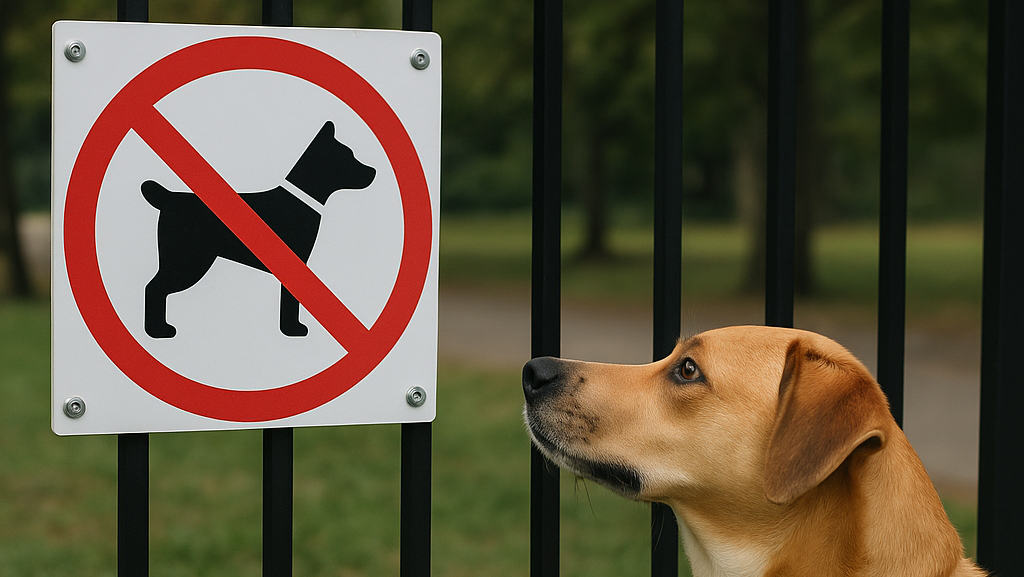
California might be famous for its sunny disposition and outdoor adventures, but when it comes to Fido-friendly policies, it’s not always sunshine and rainbows. While many places roll out the red carpet for our canine companions, some towns have enacted rules that can feel downright… well, unfriendly.
As seasoned DogTrekkers, we know that hitting the road with our pups means doing our homework. Local ordinances can change faster than a squirrel runs up a tree, and what’s allowed in one town might get you a hefty fine in the next. So let’s sniff out some of California’s most talked-about dog rules, especially those that have been controversial or have recently changed. 🐾
Good news first: Park bans are rolling back
Remember those old, seemingly archaic rules that banned dogs from city parks? Good news, DogTrekkers: Some of those are finally getting a much-needed update.
Take Paso Robles, for instance. Since 1984, an ordinance prohibited dogs from all city parks. Can you imagine? Locals and visitors often walked their leashed dogs in these green spaces, unaware they were technically breaking the law. After community pushback and recognition that times (and dog-friendly culture) have changed, the Paso Robles City Council repealed the ban in 2024. Now leashed dogs are welcome, as long as owners follow standard cleanup rules. It’s a win for responsible dog owners and a sign that some cities are catching up to the reality of pet ownership today.
But while some rules are loosening, others are getting stricter. In Pasadena, if your pup loves to roam free, you’ll need to head to a designated dog park. As of early 2024, Pasadena began strict enforcement of its leash laws in public parks. Fines can reach $500 for off-leash dogs outside designated areas. City officials said previous education efforts weren’t enough, so they upped the ante. Keep that leash handy in Pasadena.
The breed debate: Still barking loud
One of the most contentious areas of dog policy is breed-specific legislation. These laws often target certain breeds, usually pit bulls and Rottweilers, with mandatory sterilization or special licensing requirements. The idea is often to reduce aggression or overpopulation, but many argue they unfairly target responsible owners and don’t address the root issues.
San Francisco made headlines in 2005 by becoming the first city in California to mandate that all pit bulls be spayed or neutered unless an owner obtains a special $100 breeding permit. Fail to comply, and fines can reach $1,000, with possible jail time for repeat offenses. The law remains in place.
Lancaster, in Los Angeles County, has a similar ordinance requiring all pit bulls and Rottweilers (and their mixes) to be sterilized. City leaders initially promoted it as a way to curb “gang dogs,” a claim that sparked debate over breed profiling. The ordinance is still active.
For a unique twist, Hollister classifies both pit bulls and Chihuahuas as “restricted dogs” subject to mandatory spay/neuter and special licensing. This unusual pairing was aimed at reducing overpopulation for both breeds in local shelters, and it continues to be enforced.
These aren’t isolated cases. Many other California cities and counties, including Santa Rosa, Sonoma County, Barstow, Fontana, Riverside and San Bernardino County, have similar breed-specific sterilization mandates, primarily for pit bulls. If you have one of these breeds, double-check local rules.
Coastal conundrums and quiet zones
California’s beaches are a huge draw, but not all welcome four-legged visitors. Manhattan Beach (and its neighbor Hermosa Beach) maintains some of the state’s strictest beach policies. Dogs are banned from the sand, water, pier and even the Strand bike path. The reasoning: to keep the shoreline clean and safe for human beachgoers. Violators can face fines from $100 to $500. Dog lovers often point to other dog-friendly beaches, like Rosie’s Dog Beach in Long Beach, as examples of how it could be different.
In Laguna Beach, barking became a policy issue in August 2023 with a specific anti-barking ordinance. If your dog barks continuously for 30 minutes or more, or intermittently for 60 minutes or more in a 24-hour period, you could be in violation. Critics say the 30-minute threshold is tight and could penalize normal dog behavior.
Pet limits: The numbers game
Finally, let’s talk about how many furry friends you can have under one roof. While some cities are flexible, others set hard limits. Previously, there was confusion around Grand Terrace having a two-dog limit. However, as of 2024, the city states that detached single-family houses can have up to four dogs or cats. This shows that some rumored unfriendly policies might not be as restrictive as once thought. Other areas may still have limits or require special permits for multiple pets, so verify with local animal control.
The bottom line for DogTrekkers
While California generally has a dog-friendly reputation, not every town rolls out the welcome mat for Fido. From past park bans that have been overturned, like in Paso Robles, to ongoing breed-specific rules and strict leash laws, policies vary widely. Knowing local nuances is key to a stress-free trip.
Before you embark on your next California adventure with your best buddy, take a few minutes to check local ordinances. A little research goes a long way toward ensuring your DogTrekker journey is filled with happy trails and no unwelcome surprises. 🗺️🐕