California has roughly 280 state parks, 18 national forests, and a coastline that runs 840 miles. Almost all of it is better with a dog along — if we keep it that way. After twenty years of covering dog travel in this state, we’ve watched trails close to dogs one bad year at a time: too much off-leash chaos at Point Reyes, too much unbagged waste at Lake Tahoe, too many coyote-chasing incidents in the Santa Monicas. The rules tighten. Our world shrinks.
So we’re drawing a line, and we’re giving it a name. Leave Only Paw Prints® is DogTrekker’s framework for responsible dog travel — seven principles, written for the way people and dogs actually move through California. This is the opening piece. Each principle gets its own deep dive in the weeks ahead.
The Seven Principles
1. Plan ahead. Before you load the dog, check three things: leash rules (national forests allow leashed dogs; most national parks don’t allow them on trails — Yosemite and Sequoia are famously strict), seasonal closures (Western Snowy Plover nesting shuts long stretches of beach from March through September), and weather. Pavement over 125°F cooks a dog’s paw pads in under a minute, and the Central Valley hits that easily from June on.
2. Stick to the trail. Off-trail paws crush cryptobiotic crust in the desert, trample lupine and poppy seedlings in spring, and push nesting birds off their clutches. The single-track exists for a reason. Use it, even when your dog clearly has opinions about the squirrel situation twelve feet to the left.
3. Pack out every pile. Every one. A bagged pile left “for the way back” is the most common trail lie in California, and we’ve all told it. Dog waste isn’t fertilizer — it carries nitrogen loads and pathogens that native soils aren’t built for. Bag it, carry it, trash it. If you’re going more than a mile in, clip the bag to your pack and own the smell.
4. Leave what you find. No stick collecting from live shrubs. No rock stacking — those little cairns confuse navigation and displace the habitat of salamanders, lizards, and ground-nesting insects. No pocketed pinecones, shells, or wildflowers. The next hiker deserves to find the place the way you did.
5. Give wildlife the full 100 yards. That’s the National Park Service’s minimum, and it applies to bears, coyotes, bobcats, and deer alike. A dog at the end of a 6-foot leash who spots a fawn will still trigger the doe’s flight response at 50 yards. Your recall needs to be better than their prey drive — and if it isn’t, shorten the leash before you need to.
The Last Two — And Why They Matter Most
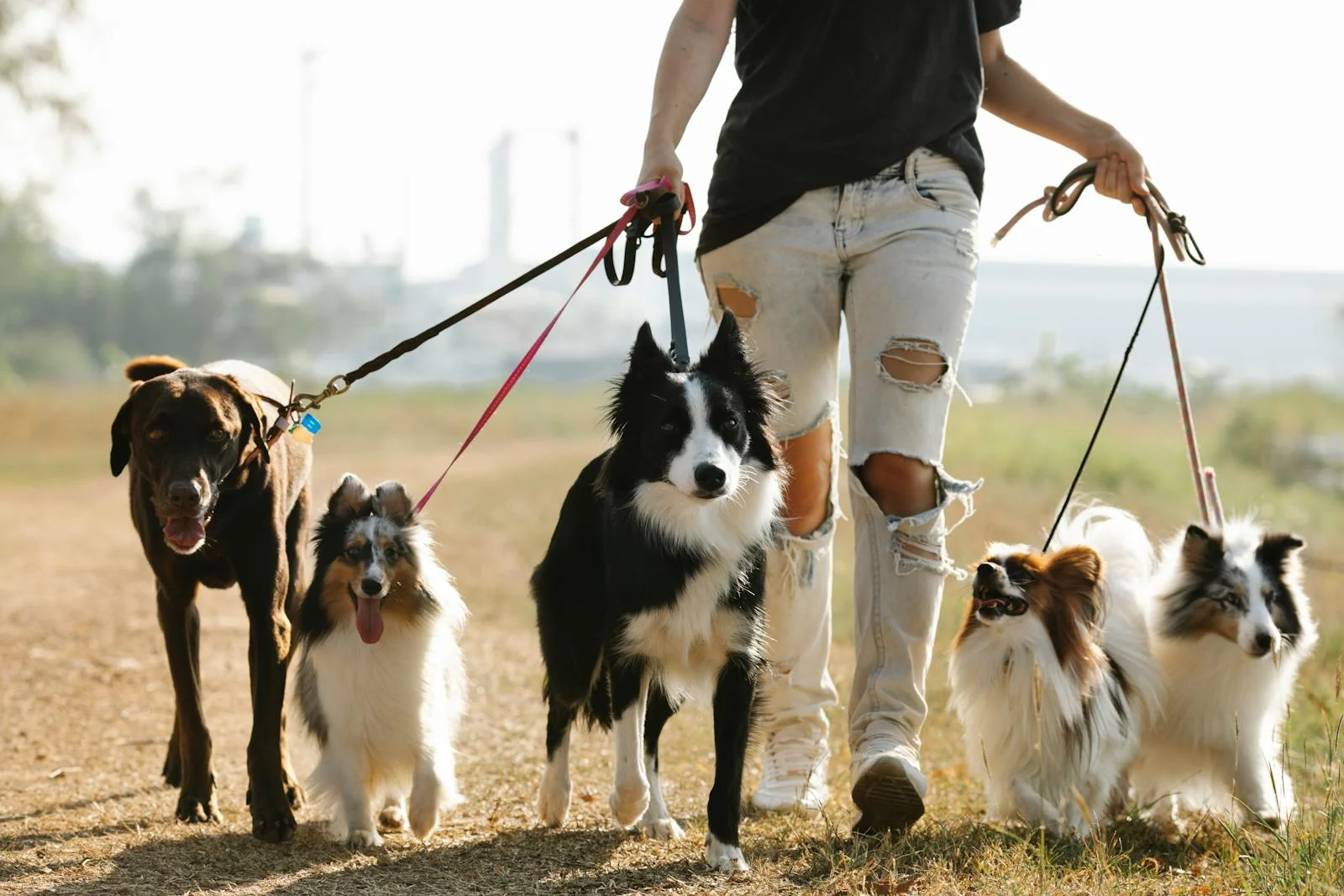
6. Share the trail. Yield to uphill hikers. Step well off-trail for horses (they spook; your dog is a novel predator to a 1,200-pound animal with a rider on top). Leash up when you see mountain bikes. Be the dog team other hikers remember fondly — that’s how trails stay open.
7. Know before you off-leash. Off-leash is a privilege granted in specific places: designated OLAs like Fort Funston, Point Isabel, and a handful of national forest zones. Even there, voice control is the bar — not “my dog is usually pretty good.” If you can’t call your dog off a deer mid-chase, they’re not ready. That’s not a judgment; it’s a training goal.
Seven principles. One goal: more places, more trails, and more years of California dog travel ahead. Leave Only Paw Prints — and we’ll see you out there.