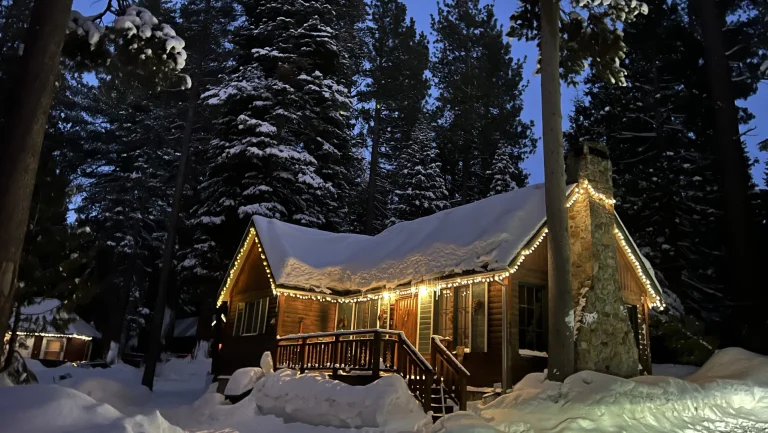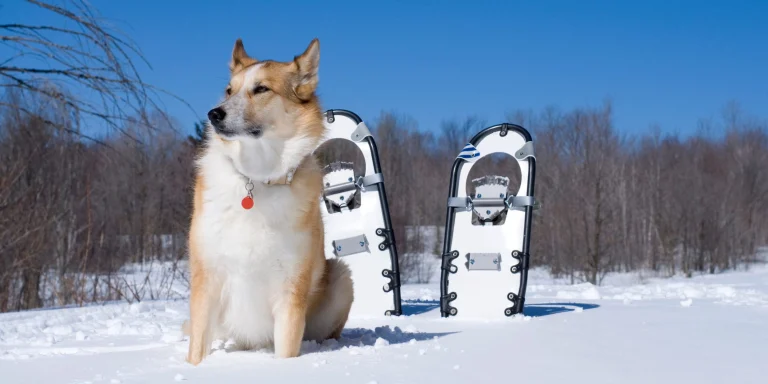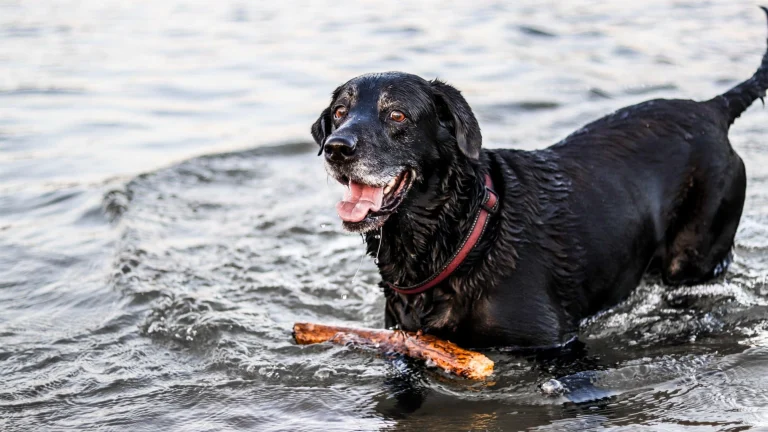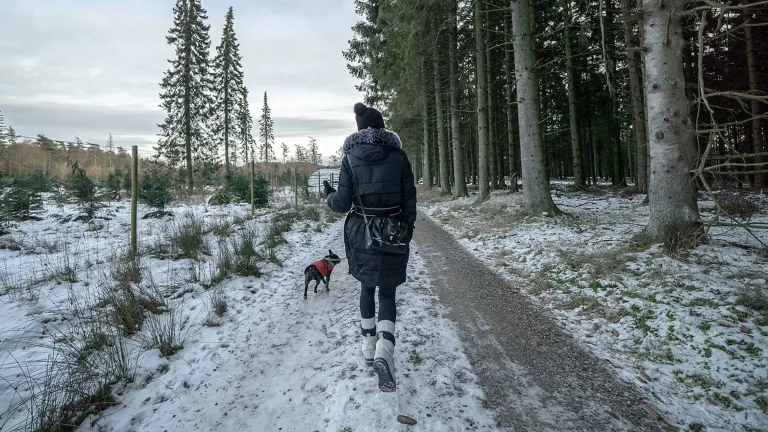
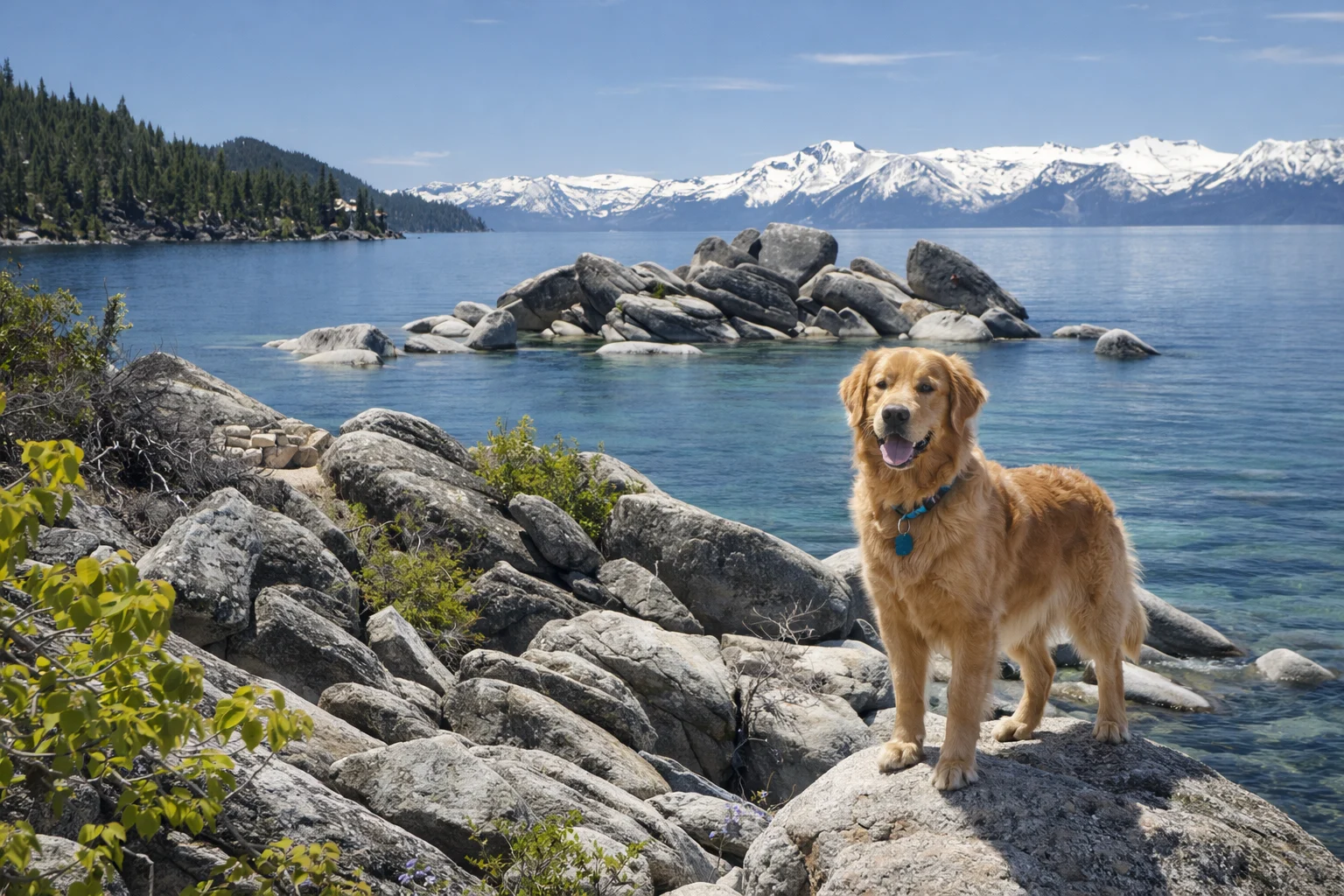
Lake Tahoe and the High Sierra offer some of the most breathtaking scenery in California, and the good news is that much of it is accessible to visitors of all mobility levels — along with their dogs. We’ve compiled a guide to the best ADA accessible, dog-friendly trails in the region, from paved lakeside paths with panoramic views to historic flume trails winding through old-growth forest. Whether you’re navigating with a wheelchair, pushing a stroller, or simply looking for level ground for a senior dog with creaky joints, these trails deliver genuine mountain experiences without the steep grades. For a broader look at accessible trails across the state, check out our statewide guide to ADA accessible trails.
A note about service dogs: Under the ADA, service dogs are permitted on all public trails — including those where pet dogs may be restricted. We’ve focused this guide on trails that welcome both service dogs and pet dogs on leash, so everyone can enjoy the outing together.
Truckee River Legacy Trail, Truckee
The Truckee River Legacy Trail is one of the most reliably accessible trails in the entire Tahoe region. This fully paved Class I bike path stretches roughly five miles along the Truckee River, offering a smooth, level surface suitable for wheelchairs, power chairs, and mobility scooters. The trail winds through pine forest alongside the river, crossing a bridge over Martis Creek and passing through some of the prettiest riparian scenery in the Truckee area. Dogs are welcome on leash, and the trail is equipped with dog waste bag stations and trash receptacles at regular intervals — a practical touch that makes a real difference on a longer outing.
What sets this trail apart for accessibility is its year-round maintenance. The path is plowed during winter, which means it remains usable even when surrounding trails are buried under several feet of snow. That’s a rare advantage at 5,800 feet of elevation. Parking is available at both ends of the trail, and the flat grade makes it manageable for anyone looking for a solid walk without elevation gain. The river views are consistently good throughout, and in summer the trail stays pleasantly shaded under the tree canopy.
Taylor Creek and the Rainbow Trail, South Lake Tahoe
Taylor Creek is home to the Rainbow Trail, a half-mile loop that ranks among the most thoughtfully designed accessible trails in the Sierra. The entire path is paved and boardwalked, with a surface width of three to six feet and grades that stay at five percent or less — well within ADA standards. The parking lot off Visitor Center Road includes designated accessible spaces with van-accessible striped aisles. Interpretive signs along the route describe the creek ecosystem, and in autumn the boardwalk offers views of kokanee salmon spawning in the shallow water below.
Dogs are welcome on leash throughout most of the Taylor Creek area, though they cannot enter the marsh zone or the Stream Profile Chamber. The accessible trail itself is fully open to leashed dogs. The Taylor Creek Visitor Center operates from June through October, but the grounds and trails remain open year-round. In winter, the area becomes popular for snowshoeing and cross-country skiing, though the paved trail surface may be snow-covered. Summer and fall are the ideal seasons for an accessible visit with your dog.
Tahoe City Lakeside Trail, Tahoe City
The Tahoe City Lakeside Trail runs just over a mile along the west shore of Lake Tahoe, starting at Commons Beach in downtown Tahoe City and following the shoreline westward. The path is fully paved and flat, making it one of the easiest wheelchair-accessible walks in the region. The lakeside setting is hard to beat — the trail hugs the water closely enough that we can hear waves on the rocks during breezy days, and the views across the lake to the Carson Range are wide open for the entire stretch.
Dogs must be on leash, and the trail sees steady foot traffic during summer months, so keeping your dog close is both a rule and a practical necessity. The downtown starting point means restrooms, water, and dog-friendly restaurant patios are all within easy reach. This trail also connects to the broader Tahoe City multi-use trail network, which extends north toward Dollar Point and south toward Sugar Pine Point State Park along Highway 89 — all on paved surfaces. For visitors looking to combine an accessible trail walk with a meal at a dog-friendly patio in Tahoe City, this is the most convenient option on the west shore.
Trout Creek Trail, Truckee
The Trout Creek Trail is a paved multi-use path connecting the Tahoe Donner neighborhood to downtown Truckee via Bridge Street, covering about three miles round trip. The entire surface is paved and consistently maintained, with a gentle grade that makes it accessible for wheelchairs and mobility devices. The trail follows a pleasant canyon lined with aspen and pine, with Trout Creek running alongside for much of the route. A bridge crossing midway offers views of the water moving through the canyon below.
Like the Legacy Trail, this path gets plowed in winter — a significant advantage for visitors who need a reliable accessible surface during the snowy months. Both trailheads have parking lots, eliminating the need to hunt for pullouts or street parking. Dog waste bag stations and garbage cans are distributed along the trail. The paved surface is especially useful for dogs with joint issues or those still learning leash manners, and the relatively flat terrain means a senior dog can cover the full distance without strain. Dogs must be on leash throughout.
Ed Z’berg Sugar Pine Point State Park, Tahoma
Ed Z’berg Sugar Pine Point State Park sits on Lake Tahoe’s west shore near Tahoma and includes the Lakefront Interpretive Trail — a paved, flat, quarter-mile path running along the shoreline. The trail is wheelchair accessible, and the park’s pier at Sugar Pine Point Beach is also accessible for visitors using mobility equipment. It’s a short trail, but the lakefront setting is exceptional, with views across the water and interpretive signage about the area’s natural history.
Dogs are allowed in developed areas of the park, which includes paved roads, paths, campsites, and parking areas. This means leashed dogs can join you on the Lakefront Interpretive Trail and the paved fire roads, but not on the natural-surfaced park trails like the Dolder Nature Trail. For an accessible outing with a dog, the lakefront path and surrounding developed areas provide a scenic and manageable visit. The park is located about 10 miles south of Tahoe City on Highway 89, with accessible parking and restrooms available near the trailhead.
Donner Memorial State Park, Truckee
Donner Memorial State Park in Truckee offers the Lakeside Interpretive Trail, a 1.4-mile easy path that hugs the southern shore of Donner Lake. While the park’s separate Nature Trail (a half-mile accessible loop with boardwalks near the historic Murphy Cabin site) does not allow dogs, the Lakeside Interpretive Trail welcomes leashed dogs and provides a relatively gentle walking surface with lake views throughout. Dogs must remain on a six-foot maximum leash and are also allowed on fire roads and along the lakeshore, except for China Cove Beach.
The park sits at about 5,900 feet and offers a powerful combination of natural beauty and California history — the Emigrant Trail Museum tells the story of the Donner Party and the region’s Indigenous peoples. For visitors prioritizing accessibility, the Lakeside Interpretive Trail’s even grade and packed surface make it one of the more comfortable walks in the Truckee area. Parking, restrooms, and picnic areas are all available near the trailhead. The park is open year-round, though snow may affect trail conditions from November through April.
Independence Trail, Nevada City
The Independence Trail holds the distinction of being the first wheelchair-accessible wilderness trail in the United States. Located along the South Yuba River canyon about five miles north of Nevada City on Highway 49, the trail follows the route of the historic Excelsior Ditch, built around 1859 to carry water for hydraulic mining. In 1969, John Olmsted rediscovered the old canal and its adjacent paths, leading to the trail’s development as an accessible wilderness experience. The first 1.5 miles in either direction from the trailhead are wheelchair accessible under normal conditions, though heavy rains can temporarily affect the surface.
Leashed dogs are welcome year-round, and the trail’s extra-wide, level grade — following the contour of the old mining ditch — makes it comfortable for dogs and handlers of all abilities. Heading west from the trailhead, a 520-foot switchback ramp leads down to a scenic swimming hole on the South Yuba River. The eastbound route passes through mixed conifer and hardwood forest with views of Rush Creek and the South Yuba River canyon. Old wooden flumes along the way add historical texture to what is already one of the most unique accessible trails in California. While technically in the Gold Country foothills rather than the High Sierra proper, the trail’s proximity to the Tahoe region and its significance as a pioneering accessible wilderness path make it an essential inclusion on any list.
Know your rights on the trail
Under the Americans with Disabilities Act (ADA), service dogs are permitted in all public spaces, including trails, parks, and beaches — even where pet dogs are prohibited. California’s Unruh Civil Rights Act and Disabled Persons Act extend these protections further. A service dog must be under the handler’s control (leash, harness, or voice command) and housebroken. Businesses and park staff may ask only two questions: (1) is this a service animal required because of a disability, and (2) what task has the dog been trained to perform. They may not ask about the handler’s disability, require documentation, or charge extra fees.
Planning your accessible trail visit
The Lake Tahoe and High Sierra region presents a few unique considerations for accessible trail visits. Elevation is the most important: most of these trails sit between 5,800 and 6,300 feet above sea level, where the air is thinner and physical exertion feels harder than at lower elevations. We recommend allowing a day to acclimate before tackling longer trails, staying hydrated, and watching your dog for signs of altitude-related fatigue — excessive panting, reluctance to walk, or unusual lethargy.
The trail season is shorter here than in most of California. Snow can linger on trails well into June, and early storms may arrive by late October. The paved trails in Truckee — the Legacy Trail and Trout Creek Trail — are plowed during winter, but most other trails on this list will be snow-covered from roughly November through May. Always check current conditions before visiting, especially in spring and fall shoulder seasons.
Bear activity is a genuine factor in the Tahoe basin from spring through fall. Keep all food secured in your vehicle (bears can and do open coolers), never leave your dog unattended, and carry bear spray if it gives you peace of mind. Most bears in the Tahoe area are habituated to humans and will avoid confrontation, but a dog’s bark can sometimes escalate an encounter. Keep your dog close and under control if you spot wildlife. Finally, summer temperatures at this elevation can swing dramatically — mornings may start in the 40s and afternoons can reach the 80s — so bring layers for yourself and water for your dog.