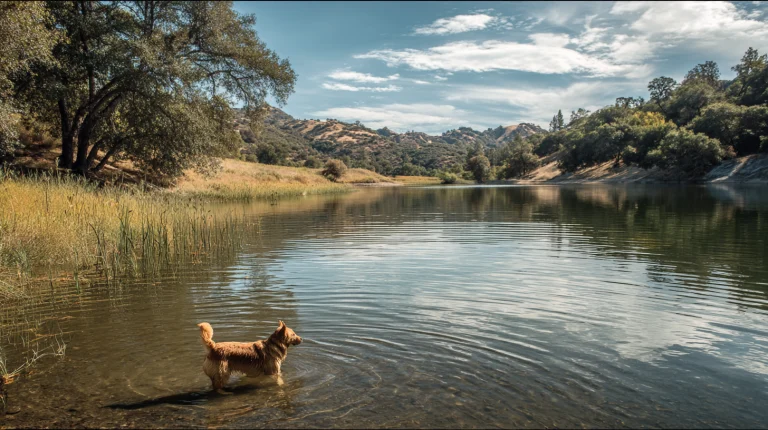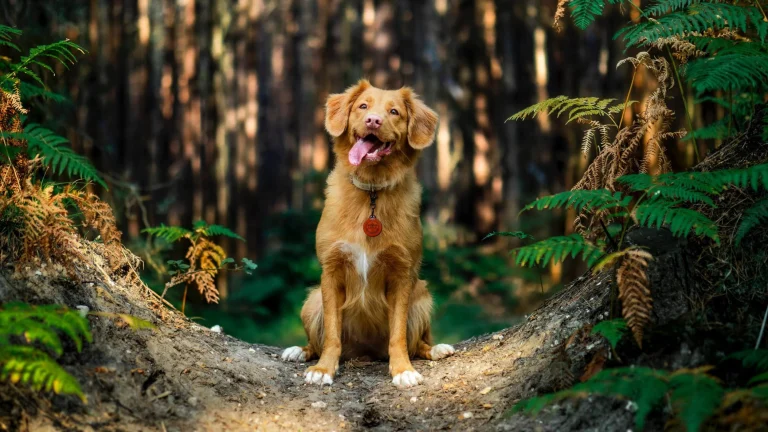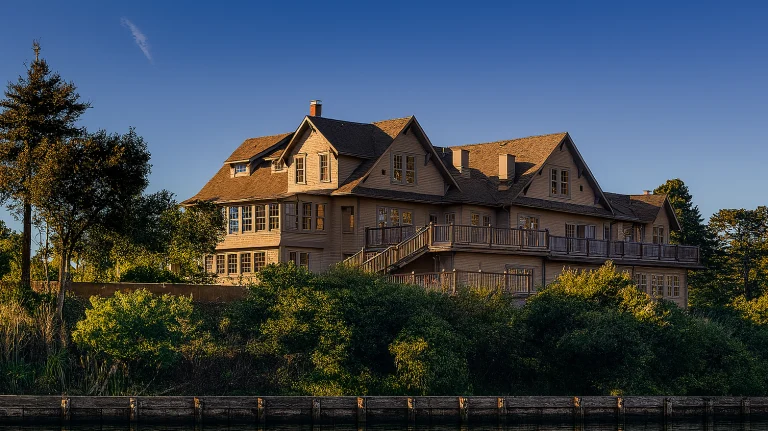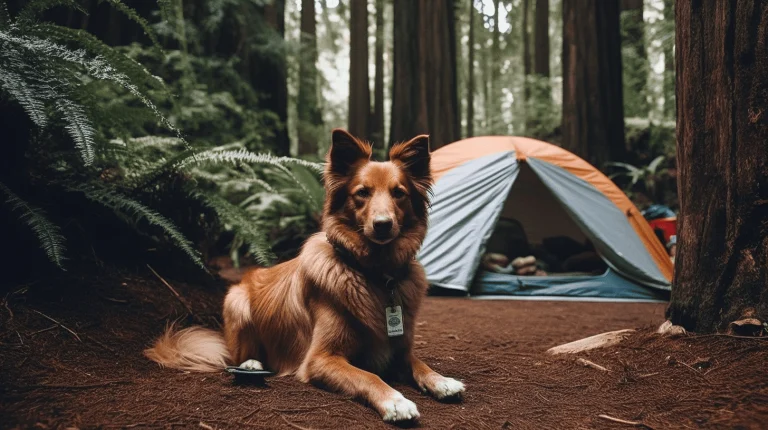
California’s North Coast is one of the most dramatic stretches of coastline in the state — towering redwoods, rugged bluffs, and quiet estuaries that feel a world away from the bustle of the Bay Area. For visitors with mobility challenges who want to share the experience with a four-legged companion, the good news is that a growing number of trails along this coast have been built or improved with accessibility in mind. We’ve compiled a guide to some of the best ADA accessible, dog-friendly trails from the Sonoma-Mendocino border up through Humboldt County. For trails beyond this region, check out our statewide guide to ADA accessible trails.
A note about service dogs: under the Americans with Disabilities Act, service dogs are welcome in all public spaces — including trails, parks, and beaches where pet dogs may be restricted. Throughout this guide, we focus on trails where leashed pet dogs are also welcome, so handlers with service dogs will find even more options available to them across the North Coast’s extensive park system.

Noyo Headlands Coastal Trail, Fort Bragg
The Noyo Headlands Coastal Trail is one of the standout accessible trails on the entire Mendocino coast. Built on the headlands west of Fort Bragg — land that was closed to the public for over a century — the eight-foot-wide asphalt path is fully ADA accessible, with gentle grades and a smooth surface suitable for wheelchairs, power chairs, and mobility scooters. The trail connects to MacKerricher State Park on its north end and to Noyo Harbor and Pomo Bluffs Park on its south end, giving visitors several miles of continuous paved coastline to explore.
Leashed dogs are welcome on the entire trail. Accessible parking and restrooms are available at both trailheads — the north lot is reached from Elm Street (south of Glass Beach), while the south lot is off Cypress Street near Noyo Harbor. Benches placed along the route are custom-made by local artists and woodworkers, and interpretive panels cover both the natural and industrial history of the site. Depending on the season, we’ve spotted seals, sea lions, migrating whales, and a variety of seabirds from the trail. On a clear day, the views stretch for miles along the Mendocino coast.
Haul Road Recreation Trail (Ten Mile Beach Trail), Fort Bragg
Also known as the Ten Mile Beach Trail, the Haul Road Recreation Trail follows a former Union Lumber Company railroad corridor north from Fort Bragg along the coast. The route is flat and paved, making it one of the most accessible coastal walks in Mendocino County. The trail begins near the Pudding Creek Trestle — a 515-foot-long former railroad bridge converted for pedestrian and bicycle use in 2007 — and continues north for about three miles to the community of Cleone.
The paved surface is smooth enough for wheelchairs and strollers, and the flat grade means the trail requires minimal physical effort. Leashed dogs are welcome along the entire route. Sweeping ocean views stay with you the whole way, and there are occasional beach access points where handlers can step off the main trail for a closer look at the surf. Note that dogs are not permitted north beyond Cleone into the Inglenook Fen Ten Mile Dunes Preserve, which is protected habitat for the Western Snowy Plover. Bring water — there is little shade once you leave downtown Fort Bragg.
Pomo Bluffs Park, Fort Bragg
Sitting on 25 acres of spectacular southern bluffs above Noyo Bay, Pomo Bluffs Park offers a shorter but equally rewarding accessible walk. The roughly half-mile paved trail is flat and suitable for wheelchairs, strollers, and mobility devices. It leaves from the east end of the parking area and follows the bluff edge, delivering panoramic views of the Pacific Ocean and Noyo Harbor Beach below.
Leashed dogs are welcome throughout the park. Benches and interpretive signs are spaced along the trail, and vault restrooms are available near the parking area. Additional unpaved dirt paths branch off the main route for those who want to explore further on foot. Pomo Bluffs connects to the southern end of the Noyo Headlands Coastal Trail, so visitors who want a longer outing can combine the two for a full morning of accessible coastal walking in Fort Bragg. The park’s location on the south side of Noyo Harbor also offers some wind protection on breezy days, which is worth knowing on this stretch of coast.
Big River Trail, Mendocino
The Big River Trail follows the Big River estuary east from Mendocino along a wide former logging haul road that extends roughly ten miles to Mendocino Woodlands State Park. While the surface is compacted dirt and gravel rather than asphalt, the road is wide, mostly flat, and designated as accessible for wheelchair users along with equestrians, bikers, and hikers. The gentle grade and broad surface make it navigable for many mobility devices, particularly in dry weather when the surface is firm.
Leashed dogs are welcome on the trail. The estuary setting is genuinely peaceful — expect views of the river reflecting coastal redwoods and scrub, with opportunities to spot birds, seals, and otters, especially in the early morning when wildlife is most active. Access is straightforward: from Mendocino, turn left just before Highway 1 crosses the bridge over Big River and follow the road down to the parking area. Restrooms are available near the trailhead. We recommend bringing water for both handler and dog, as there is limited shade on the inland stretches. Be aware that the unpaved surface can become soft or muddy after heavy rain, which may limit wheelchair access during the wet season.
Sequoia Park, Eureka
Sequoia Park in Eureka is a 60-acre city park set among towering old-growth redwoods, and it includes over a mile of paved, wheelchair-accessible asphalt trails. The highlight for accessibility is the Sequoia Creek Trail, a three-quarter-mile paved loop that heads west from the duck pond through meadows and alongside a forested creek beneath the redwood canopy. The trail is smooth enough for wheelchairs, power chairs, and strollers, with designated accessible parking, an accessible sidewalk to picnic sites, and accessible restrooms.
Leashed dogs are welcome throughout the park. Walking beneath old-growth redwoods on a paved trail with your dog is a genuinely rare experience — most old-growth groves in state and national parks prohibit dogs on trails entirely. The park stays cool even on warm days thanks to the dense canopy, and the creek areas give dogs a chance to splash around and cool off. Sequoia Park is located within the city of Eureka, making it an easy stop for visitors staying in town who want a forest walk without a long drive on winding roads.
Hammond Trail, McKinleyville
The Hammond Trail is a 5.5-mile multi-use segment of the California Coastal Trail stretching from the Arcata Bottoms north to Clam Beach County Park near McKinleyville. Most of the trail is paved and designated as accessible for wheelchair users, with panoramic ocean views, an accessible bridge over the Mad River, and designated accessible parking at Hiller Park and the Murray Road trailhead.
Leashed dogs are welcome along the entire route, and the trail is popular with dog walkers year-round. A few sections require some awareness for wheelchair users: about a half-mile near Clam Beach transitions to firm-packed dirt and gravel, and there are steeper grades near the Mad River Bridge and the Clam Beach descent. A slight cross-slope on the first several miles may also affect manual wheelchair users. That said, the majority of the trail is comfortably navigable with a mobility device, and the coastal scenery — open ocean, dunes, and the Mad River estuary — makes it one of the most scenic accessible walks in Humboldt County.
Gualala Point Regional Park, Gualala
At the southern edge of the North Coast region, Gualala Point Regional Park offers a paved, ADA-accessible trail from the parking area to the beach — less than a mile through meadows of tall grass and groves of gnarled Monterey cypress. The trail provides views of the town of Gualala and the river mouth, and the gentle grade makes it a comfortable walk for wheelchair users and visitors with limited mobility.
Leashed dogs are welcome on trails, beaches, and in the campground (leash must be six feet or shorter). The park is open daily from 8 a.m. to sunset, with extended summer hours starting at 6 a.m. Restrooms are available near the parking lot and close to the beach access. The Gualala River mouth is a particularly scenic spot where the river meets the ocean, and watching the seasonal breach — when heavy rains push the river through to the Pacific — is a dramatic natural event. The park also connects to the unpaved Bluff Top Trail, which continues north along the coast for those who want additional exploration beyond the accessible section.
Know your rights on the trail
Under the Americans with Disabilities Act (ADA), service dogs are permitted in all public spaces, including trails, parks, and beaches — even where pet dogs are prohibited. California’s Unruh Civil Rights Act and Disabled Persons Act extend these protections further. A service dog must be under the handler’s control (leash, harness, or voice command) and housebroken. Businesses and park staff may ask only two questions: (1) is this a service animal required because of a disability, and (2) what task has the dog been trained to perform. They may not ask about the handler’s disability, require documentation, or charge extra fees.
Planning your accessible trail visit
The North Coast rewards preparation more than most parts of California. Rain and mud season typically runs from November through April, and even accessible paved trails can have standing water, debris, or soft shoulders during and after storms. Unpaved accessible trails like the Big River haul road may become impassable for wheelchairs during the wet months. Coastal wind is a year-round factor — Fort Bragg and the Mendocino headlands are frequently windy, and exposed trails along the bluffs can be challenging for lightweight wheelchairs or anyone sensitive to wind chill. Layering is essential even in summer, when fog can keep temperatures in the 50s.
Many of these trails are in remote locations with limited or no cell service. The Mendocino Bay Viewpoint, sections of the Hammond Trail, and stretches of Highway 1 between towns all have dead zones. Download maps and directions before you leave your lodging, and let someone know your plans. Road conditions on Highway 1 and Highway 101 can change quickly during winter storms — check Caltrans road conditions before heading out, especially for the more remote trails in Humboldt and Del Norte counties. Finally, services like accessible restrooms, water, and emergency assistance may be spaced far apart, so we recommend carrying supplies for both handler and dog and planning conservatively for distance and timing.